
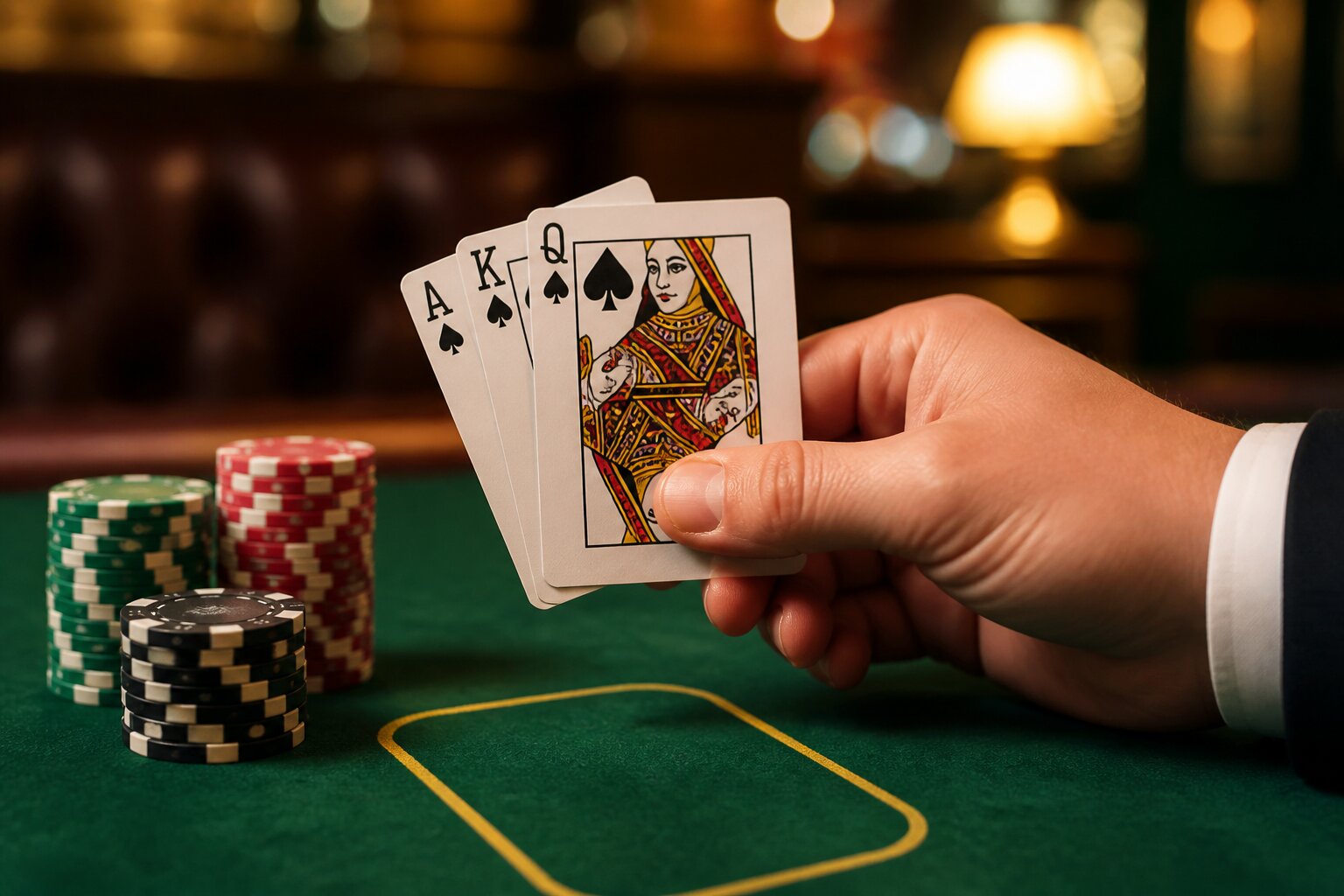
Ever wondered which hands win and which leave you out of the running in 3 Card Brag? Knowing the hand order makes a big difference whether you are playing with friends or following a game online.
This game uses its own ranking system, distinct from poker, so a quick refresher helps you judge a hand the moment the cards are down. Read on for a clear, example-led guide to the best and worst hands and how ties are settled.
What Is 3 Card Brag & How Is It Played?
3 Card Brag is a short, social card game where each player receives three cards and the aim is to hold the highest-ranking hand at showdown. Betting and bluffing are part of the contest, but the basic idea is straightforward: compare the established hand rankings and the highest wins the pot.
Rounds move quickly. After cards are dealt, players choose whether to stay in or fold based on their hand and how much they want to risk. When hands are revealed, the ranking order determines the winner.
Set clear limits on stakes before you play so every round stays within agreed boundaries and the focus remains on the game itself.
How Are Hands Ranked In 3 Card Brag?
Hand value in 3 Card Brag depends on specific combinations made from your three cards. From strongest to weakest, the common order is:
- Prial (three of a kind)
- Running flush (three consecutive cards in the same suit)
- Run (three consecutive cards in mixed suits)
- Flush (three cards of the same suit, not in sequence)
- Pair (two cards of the same value plus a different third card)
- High card (no matching or sequential combination)
A prial beats every other hand type. Within prials the ranking follows a fixed order, with three 3s at the top, then three Aces, then three Kings, and down through the ranks. Runs and flushes are ordered by their highest cards when comparing two of the same type.
Best 3 Card Brag Hands Explained
- The Top-Ranked Hands In Detail
These top combinations are the ones players most want to see. Each has its own flavour and frequency, so understanding them helps when assessing a bet or deciding to stay in.
Prial (Pair Royal)
A prial is three cards of the same rank, for example three 7s or three Queens. In Brag the ranking of prials is unusual compared with many other card games: three 3s sit at the very top, followed by three Aces, then three Kings, and so on down the line. This ordering is a traditional quirk that new players should note early on.
Because prials are very rare, they usually command respect at the table and will beat any other type of hand. When two players both hold prials the hand ranks are compared in the normal way, with the higher-ranked triplet winning.
Running Flush
A running flush consists of three consecutive cards all in a single suit, such as 4-5-6 of hearts. It sits directly below prials in strength and combines the value of a run with the added weight of a single suit. The fact that the cards must be both consecutive and suited makes this hand notably less common than a plain run or a plain flush.
Running flushes can be decisive in play because they balance rarity and relative frequency. When two running flushes face off, the run with the higher top card wins, and suit does not usually affect the comparison unless house rules state otherwise.
Run
A run is simply three consecutive cards in any suits, for example 7-8-9 where suits differ. Runs beat flushes and lower hands because the sequence is harder to achieve with only three cards. They are more common than running flushes but still strong enough to win many pots.
When two runs meet, the run with the higher top card wins. If the top cards are equal, standard tie-breaking follows the order of the remaining cards, and if all ranks are equal then the hands are equal unless a specific house rule treats suits as a decider.
Lowest 3 Card Brag Hands: What Are The Worst Combinations?
Lower-ranked hands are those that do not form the special combinations above. A high card hand occurs when the three cards are all different in rank and not sequential or suited. For example, 2 of clubs, 7 of hearts and 10 of diamonds would be assessed by the highest card, in this case the 10.
Pairs, where two cards share the same rank and the third differs, sit above high card hands but below flushes. These hands can win at the table, particularly against other low hands, but they are comparatively weak.
The distribution of possible hands means most deals will produce mid- or low-ranking combinations, so the ability to judge relative strength quickly matters during betting.
What Happens When Two Hands Are Equal In 3 Card Brag?
When players hold the same category of hand, comparisons move to the card values. For pairs and runs, the hand with the higher card values wins; for example, a pair of Kings beats a pair of Jacks. If the highest cards are equal, the next highest cards are compared until a difference is found.
Prials use the established prial order to break ties, with three 3s highest. For flushes and high-card hands, suits do not break ties; only card values do. If two hands are entirely equal in value, the pot is usually split according to the house rules in play.
These rules keep outcomes clear and fair when similar hands meet at showdown.
How Do 3 Card Brag Hand Rankings Differ From Poker?
The same names can mean different things across card games, so it helps to pin down the contrasts. In many poker variants, a straight flush or a full house may be top-ranked in five-card contexts. In three-card Brag, however, a prial outranks a running flush.
A further difference lies in how sequences and suits interact. Poker often ranks a straight above a flush when comparing five-card hands, but Brag gives more weight to suits when they combine with a sequence, placing a running flush above an ordinary run.
These distinctions flow from the smaller hand size and the specific tradition of Brag. Knowing them prevents confusion at the table and helps you evaluate hands on the game's own terms.
Common Myths About 3 Card Brag Hands Order
A few persistent misunderstandings circulate among players. Clearing them up makes play smoother and prevents disputes.
One myth is that a flush always beats a straight across all card games. In Brag, a run outranks a flush, so that assumption can lead to mistakes. Another is that three Aces are the top prial; as noted earlier, three 3s sit above three Aces in Brag’s order. Finally, some players expect suits to decide tied hands. In this game, suits are not used as tie-breakers; comparisons rely on card values alone.
Knowing the real rules reduces guesswork and keeps rounds moving. Stick to the established ranking order and any local table rules agreed before play begins.
You’ve now got a clear guide to which hands dominate and which rarely win. Keep these rankings in mind at the table and you’ll judge hands and bets with greater confidence.
**The information provided in this blog is intended for educational purposes and should not be construed as betting advice or a guarantee of success. Always gamble responsibly.