
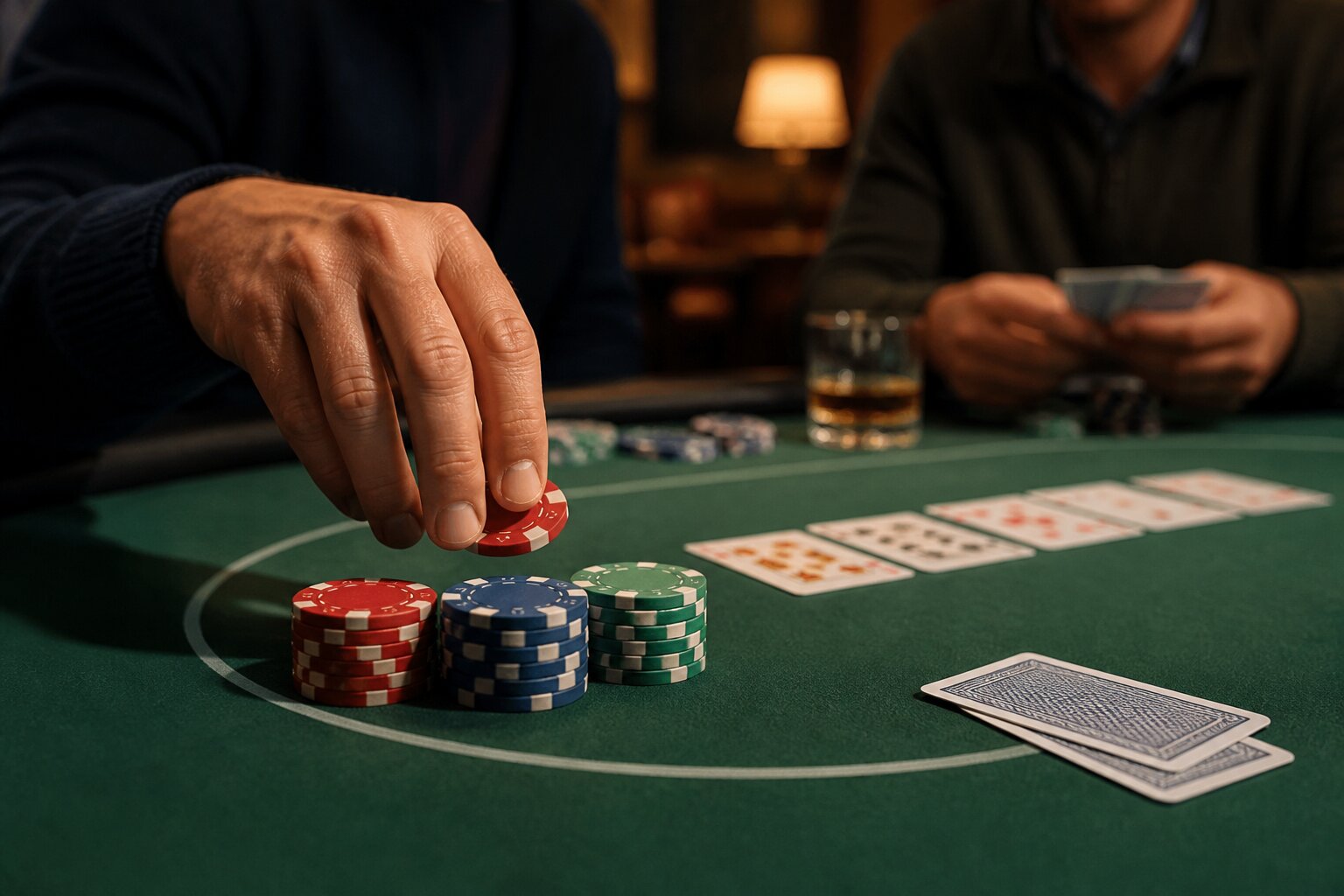
Ever watched a game of poker and wondered why everyone has to put some chips in the pot before the cards are even dealt? It’s a small rule that changes how every hand plays out, turning otherwise quiet rounds into hands that matter from the first card. Whether you’re at a casino table or around the kitchen table, the ante is a basic mechanic worth understanding.
Many casual players view antes as a minor annoyance, while more experienced players see how they alter strategy and tempo. If you’ve ever been unsure why they exist or when they’re used, this guide will make things clear without getting bogged down in jargon.
Getting your head round antes is simpler than it looks. Read on and you’ll see how they change decisions, pot sizes and the rhythm of a game.
What Does Ante Mean in Poker?
An ante is a small, compulsory bet every player contributes to the pot before a hand begins. Because every seat pays, the pot already contains chips before anyone acts, which makes even modest hands worth contesting and prevents endless folds.
The ante is usually a modest amount compared with later betting rounds. In a home game it might be a few pence, while in a tournament it could be a pound or two as the levels progress. The dealer or organiser will set the amount ahead of play so everyone knows what to expect.
This upfront contribution helps set the tone for the round and nudges players towards involvement rather than waiting for premium hands. That effect on behaviour is important to keep in mind when we compare antes with blinds next.
How Are Antes Different from Blinds?
Though both are forced bets, antes and blinds function differently and influence strategy in distinct ways.
Blinds are paid by two positions only: the small blind and the big blind, which rotate one seat each hand. They tend to be larger and are specific to games like Texas Hold’em and Omaha. Antes, by contrast, are paid by every player and are usually smaller; they ensure the pot starts sizeable even when a few players fold.
A clear way to see the difference is this:
- Blinds: paid by two players, positions rotate, typically larger amounts.
- Antes: paid by all players, fixed small amounts, everyone contributes each hand.
Because everyone puts in an ante, the incentive structure shifts: marginal hands become playable, and the cost of repeatedly folding rises. That behavioural change helps explain where and when tournaments or certain variants introduce antes, which is what the next section describes.
When Are Antes Used in Poker?
Antes are standard in some variants and appear at particular stages in tournaments. Games such as Seven Card Stud commonly use an ante from the start so every hand has a pot to contest. In contrast, cash games of Texas Hold’em and Omaha usually rely on blinds only, unless the players agree otherwise.
In tournament play, organisers often add antes after several blind levels. As the field narrows and blinds grow, adding an ante prevents the game from stalling and keeps pots meaningful. Home games sometimes introduce antes later in the evening for the same reason, especially if play becomes too cautious.
Because antes change incentives at the table, they’re chosen according to the format and desired pace of play rather than being a universal rule. The next section explains precisely why organisers and players value that change.
Understanding the Purpose of Antes
The prime reason to use antes is pot-building: when everyone contributes a small amount, there’s something worth competing for immediately. That makes early betting more meaningful and reduces the temptation to fold every weak hand.
Beyond the pure mechanics, antes influence behaviour. Players are less inclined to preserve chips by folding constantly because they’ve already paid into the pot; this nudges more hands to see a showdown and introduces more strategic choices. For example, in a late-stage tournament, an ante can make a marginal raise profitable because it increases the expected return from winning the pot.
Antes also help balance tournaments as the blinds climb and stacks shrink. By ensuring a continuous chip drain into the pot, they keep the game moving and prevent excessively defensive play. With that in mind, the practicalities of paying antes are straightforward and worth covering next.
How to Calculate and Pay Antes at the Table
Paying an ante is simple: everyone puts the agreed amount into the pot before the dealer shuffles. The total added equals the ante multiplied by the number of players seated. For instance, eight players each putting in 50p create a £4 starting pot.
Casual games will usually agree the ante in advance, and tournament organisers announce it as part of the structure. Dealers or organisers commonly remind players to post antes before dealing. Some venues mark an ante spot on the felt or use a small token to show it’s been posted.
Players should use the correct chips or cash value and make sure the ante fits their bankroll. Managing your stack is part of playing sensibly; choose tables where the stakes align with what you can afford. With that arithmetic in mind, a concrete example now shows how antes and blinds combine at the start of a hand.
Examples of Antes in Poker
Antes appear in many games and seeing numbers in context often makes the concept click. Below is a practical illustration followed by common pitfalls to avoid.
Simple Poker Ante Example Explained
Picture a casual game with six players. The ante is 20p per player, while the small and big blind is 50p and £1.
Each player contributes 20p, creating a £1.20 pool from antes. The small and big blind then add their bets, 50p and £1 respectively, bringing the total pot to £2.70 before any betting begins.
That pre-bet pot means every decision at the table is now played for something tangible. Because there is already money in the middle, players may change their opening ranges and view some marginal hands as worth playing, and the value of post-flop play may increase as there is more to win.
Common Mistakes When Using Antes
Forgetting to pay the ante can delay hands or mean sitting out. It is important that players confirm the amount before a hand starts so the action proceeds smoothly.
Paying the wrong sum causes disputes and slows the game, so always use the correct chips. Mistakes here can interrupt the flow of play and create awkward conversations about chip denominations.
Also, do not assume blanks. Some games require both blinds and antes, while others use only one of those structures, so check the rules at your table before you act.
Finally, factor antes into your chip management so stacks last as long as you expect. Small, recurring antes can erode a stack over time, which affects longer sessions and tournament strategy.
These practical points help you avoid awkward moments at the table and make the most of an ante-based structure. To finish, here is a quick look at which variants commonly use antes.
Do All Poker Variants Use Antes?
Not every variant uses antes; some rely on blinds, some on antes, and some mix both depending on format and stage. The table below summarises common formats and when antes are typically involved.
| Poker Variant | Uses Antes? |
|---|---|
| Texas Hold’em (cash) | Usually no |
| Texas Hold’em (tourney) | Sometimes (later levels) |
| Omaha (cash) | No |
| Omaha (tourney) | Sometimes (later levels) |
| Seven Card Stud | Yes |
| Razz | Yes |
| Five Card Draw | Sometimes |
| Short Deck Hold’em | Sometimes |
| Pineapple | Rarely |
Choosing a game should come down to knowing the rules and picking a format that matches the style you enjoy and the stakes you can afford. Playing within your means keeps poker enjoyable and sustainable, and knowing how antes affect those stakes helps you make better choices at the table.
Explore Casino Games at Slots UK
We welcome you to enjoy a relaxed experience playing casino games with us, where the focus is simply on your enjoyment and exploring what you like at your own pace. There is something engaging about joining a trusted community and seeing what catches your interest.
It’s easy to get going: just set up an account, make a deposit and you’ll be ready to play. We look forward to seeing you at Slots UK.
**The information provided in this blog is intended for educational purposes and should not be construed as betting advice or a guarantee of success. Always gamble responsibly.