
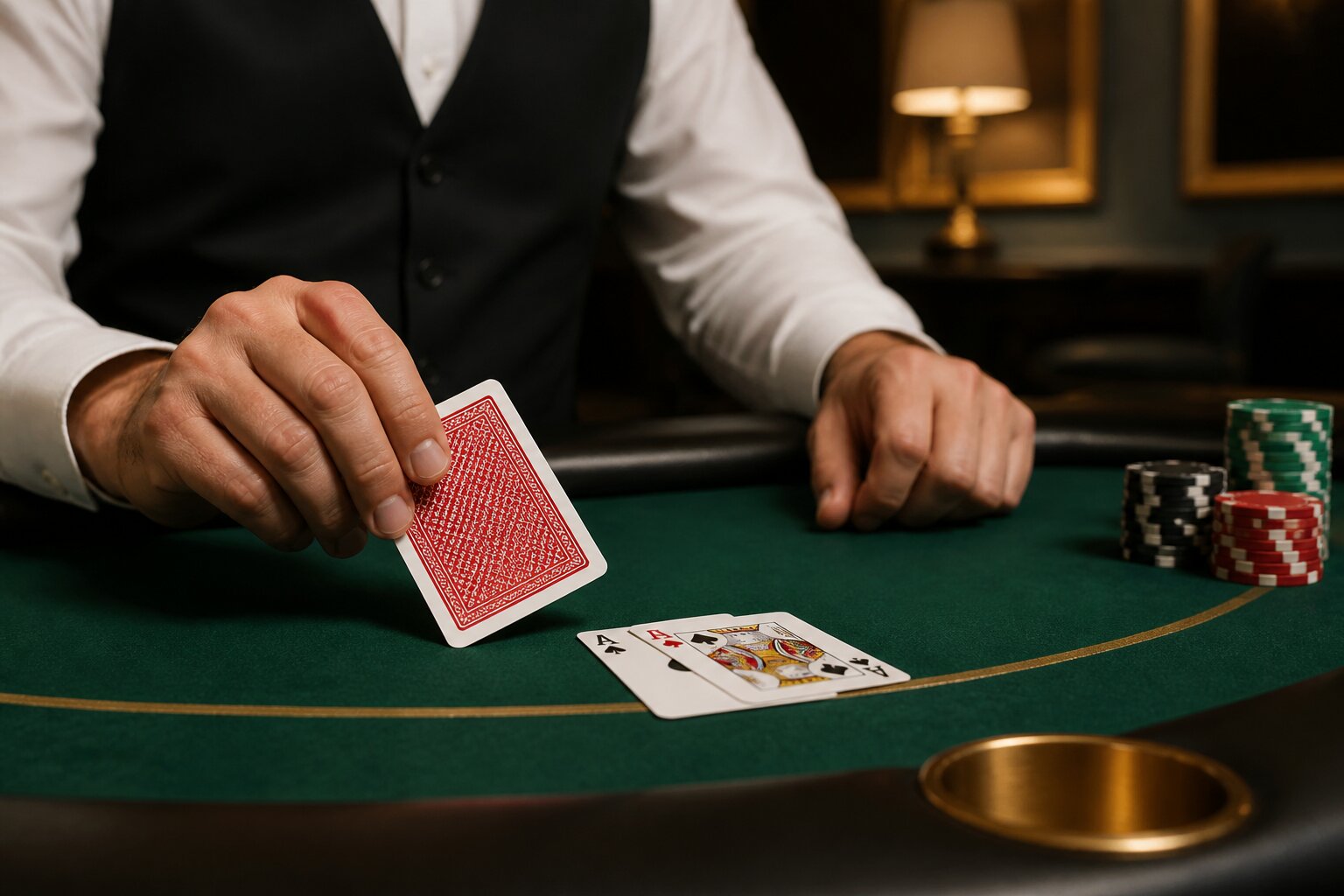
Ever felt stuck with a dreadful hand in blackjack and wished you could just walk away? The surrender rule gives you that option, letting you cut your losses before the round plays out. But how does it work, and when is it actually sensible to use?
This article explains the mechanics of surrender, the situations where it can be helpful, and how it fits with the other choices at the table. Read on to learn how surrender can be a useful tool in a well-considered approach to play.
What Is the Surrender Rule in Blackjack?
Surrender lets a player forfeit a hand in exchange for half their original bet back. It is offered only at some tables and appears in two main forms: early surrender and late surrender. With late surrender, the dealer checks for blackjack first, and surrender is only permitted if the dealer does not have blackjack. Early surrender, which is rarer, allows a player to surrender before the dealer checks.
To surrender, a player signals the dealer—by saying the word or following the table’s gesture—and the hand ends immediately if the option is accepted. Because not all games include this rule, it is wise to confirm table conditions before playing.
Surrender is intended to reduce losses in clearly unfavourable situations and gives players an extra way to manage risk at the table. The following section explains the two surrender types more clearly and why they matter.
Types of Surrender: Early vs Late
Early surrender and late surrender differ in timing and player advantage. Early surrender happens before the dealer checks for blackjack. That timing slightly improves a player’s expected return, which is why this option is uncommon. Casinos prefer to limit player advantage, so early surrender appears only rarely.
Late surrender is far more common. Here, the dealer will check for blackjack first. If the dealer does not have blackjack, the player may then surrender. If the dealer does have blackjack, surrender is not allowed and the player loses the full stake as usual. Knowing which form is in play affects whether surrender is worth considering for a particular hand.
Understanding these distinctions helps when you consult basic strategy charts or evaluate the house rules, and it leads naturally into how surrender influences overall play decisions.
How Does Surrender Affect Your Blackjack Game?
Surrender is a loss-limiting option rather than a way to win a hand. By giving up half the bet in a poor situation, the player preserves capital that can be used on future hands. Over a series of rounds, sensible use of surrender can reduce volatility and slightly improve long-term results compared with always playing to the end with a weak hand.
There is a trade-off. Surrender eliminates any chance that the hand could improve, so if a hand has a modest but real chance to win, surrender may be unnecessarily conservative. That balance is why surrender works best when used selectively, guided by the dealer’s upcard and standard strategy guidelines.
When thinking about how surrender fits with other options, the next section compares surrender to hitting, standing, splitting and doubling down to show where it sits among common choices.
When Should You Use the Surrender Option?
Surrender tends to be most effective in well-defined, disadvantageous scenarios. Two frequently cited examples are a hard 16 against a dealer 9, 10 or Ace, and a hard 15 versus a dealer 10. These combinations carry a high likelihood of losing if played conventionally, so accepting half the bet back often reduces expected loss.
The correct use of surrender depends on the table rules, particularly whether late or early surrender is offered, and on precise strategy recommendations for the game variant being played. Using surrender as a reflex or as a way to chase losses is a common mistake; it functions best as a deliberate part of an overall approach to bankroll management and decision-making.
Next we look at how commonly surrender is available in UK venues and online games, since availability affects whether you can use it at all.
Is Surrender Accepted at UK Casinos?
Surrender is not standard at every casino or in every online blackjack game. Late surrender may be present at selected tables or in particular game variants, but many games simply do not offer any surrender option. Early surrender is rarer still.
Availability can differ between land-based and online venues. Some bricks-and-mortar casinos display specific table rules on placards or dealer signs, while online sites typically list options in the game rules or help panel. Operators licensed by the UK Gambling Commission must show game rules clearly, so you should be able to confirm whether surrender applies before you play.
This means players should check the posted rules or the online help panel before sitting down or placing a wager. Looking for small print about late surrender, early surrender or any restrictions on when it can be used helps you avoid surprises. If you are unsure, ask a dealer, a floor manager or contact customer support for clarification.
Knowing whether surrender is available lets you factor it into your strategy and avoid surprises during play. If surrender is offered, it can influence decisions around hitting, standing or doubling down, so confirm the rule before committing to a hand. Many operators also provide practice or demo tables where you can try rules without financial risk, which is useful for learning how surrender fits into your approach.
Comparing Surrender to Other Player Options
Surrender is unique because it ends the hand immediately and returns half the bet. Hitting and standing are about trying to improve or preserve a hand. Splitting turns one pair into two hands, creating a separate bet and further decisions. Doubling down increases the stake for a single additional card in situations where the odds look momentarily good.
Where these options overlap is in risk management. Surrender is the most conservative of the choices, used when the statistical outlook is poor. Splitting and doubling down are techniques to exploit favourable moments, while hitting and standing are the core decisions that most hands require. Choosing wisely between these options, depending on the dealer’s upcard and the rules in play, helps manage losses and shape a consistent approach at the table.
Myths about surrender can distort how players use it, so the next section clears up common misunderstandings.
Myths About Blackjack Surrender Clarified
One persistent myth says surrender is a sign of poor skill. In truth, surrender can be a sophisticated decision that reflects knowledge of probabilities and disciplined risk control. Another misconception is that surrender guarantees better long-term results by itself. It is a tool that can reduce loss in specific situations but does not change the underlying house edge or promise consistent wins.
Some players assume surrender is always available or that it should be used whenever a hand feels weak. Both assumptions are inaccurate. Availability varies by table, and the decision to surrender should be guided by concrete measures such as the dealer’s upcard and accepted strategy recommendations.
Clearing up these myths helps you use surrender in a measured way and prepares you for the final considerations outlined next.
Summary: Should You Use the Surrender Rule?
Surrender is a practical loss-reduction tool when used in the right circumstances and where the rules allow it. It is most helpful for specific weak hands against strong dealer upcards, and its value depends on whether you face early or late surrender conditions. Use it as a considered part of strategy rather than as a default reaction.
**The information provided in this blog is intended for educational purposes and should not be construed as betting advice or a guarantee of success. Always gamble responsibly.