
Ever wondered how fruit machines operate behind the scenes? You might have heard of a 'fruit machine dongle' but not quite understood what it does or why it matters.
Whether you work in a venue that houses these machines, maintain them professionally, or are simply curious, knowing what a dongle does helps make sense of how machines are kept secure and compliant.
If you want to learn what a fruit machine dongle actually is, why it exists, and how it affects operators and players, read on—each section builds on the last so the picture becomes clearer as you go.
What Is a Fruit Machine Dongle?
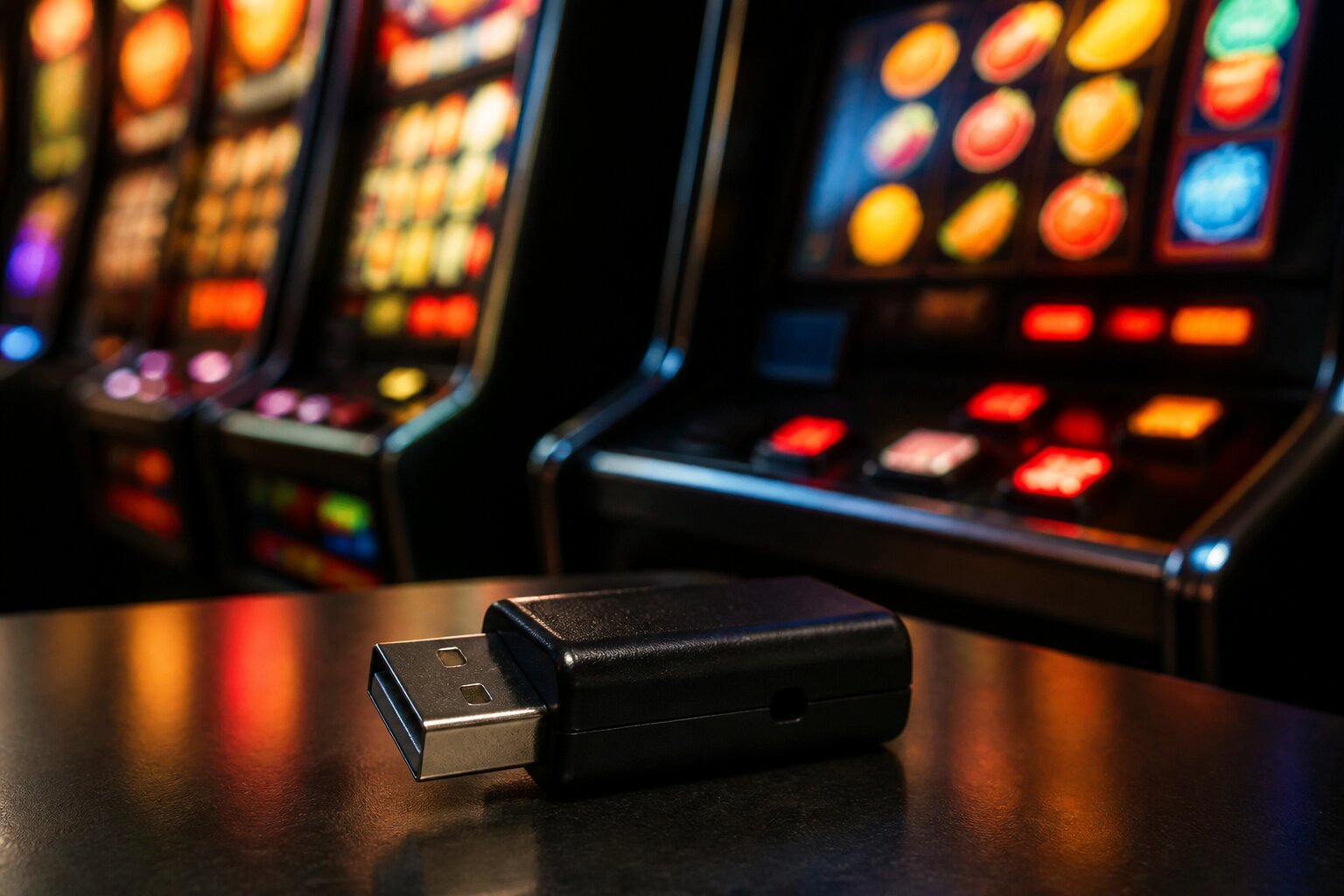
A fruit machine dongle is a small electronic device that plugs into a dedicated port on the machine. It looks similar to a USB key but is purpose-built for authorised engineers and operators rather than players.
Inside the dongle is firmware or coded information that the machine recognises as a permission token. When the correct dongle is inserted, the machine will allow certain functions that are otherwise locked down: updates, diagnostics, configuration changes and maintenance tasks.
Most machines are designed so they will not accept such changes without the proper dongle in place. That setup prevents unauthorised tampering and helps ensure machines operate according to their approved settings and regulatory requirements.
It’s important to be clear: the dongle is a technical access tool. It doesn’t alter gameplay mechanics, determine payouts, or interact with the random number processes that govern spins.
Why Do Fruit Machines Need Dongles?
Dongles exist to control access and to create an auditable trail of maintenance and configuration work. By restricting who can make changes, operators reduce the risk of fraud, accidental misconfiguration, or the use of unauthorised software.
They also support compliance. Machines must adhere to rules set by regulators, and dongles help ensure only accredited engineers carry out tasks that might affect machine behaviour or record-keeping. In practice, this means every significant change can be traced back to an authorised source, which assists inspections and audits.
Beyond security and regulation, dongles simplify safe servicing. Engineers can use a single device to authenticate, apply authorised updates, and record what was done without exposing sensitive system controls to general staff or the public.
Knowing this helps explain why venues invest in controlled access methods rather than leaving crucial functions open.
How Does a Fruit Machine Dongle Work?
When inserted, the dongle and the machine exchange coded signals. The machine reads the dongle’s credentials and checks whether the requested function—such as a software update or diagnostic run—is permitted. If the credentials match the machine’s expectation, it enables the relevant maintenance features.
This handshake prevents unauthorised changes because counterfeit or incorrect devices won’t present the correct code, and the machine will refuse the request. Engineers therefore carry an authenticated device that the machine recognises as valid, allowing secure intervention without exposing internal systems to general access.
The dongle’s role is limited to authorising and logging such actions; it does not participate in deciding game results or altering randomness.
Types of Dongles Used in Fruit Machines
There are several common categories of dongles used in industry practice, each serving a focused purpose:
- Authentication dongles: these unlock restricted settings so accredited staff can access maintenance or configuration menus.
- Update dongles: these carry and apply approved software updates or patches provided by the manufacturer.
- Compliance dongles: designed to log changes and provide proof that maintenance met regulatory or manufacturer standards.
Each type contributes to a secure lifecycle for a machine without affecting how games are played.
Are Fruit Machine Dongles Legal in the UK?
Dongles are legal when issued and used by licensed operators and qualified engineers in accordance with regulatory rules. Their legitimate function is to maintain integrity and traceability for equipment used in gambling environments.
Using unauthorised or fraudulent devices is illegal. Examples of prohibited activity include:
- using counterfeit dongles or fake credentials,
- circumventing authentication systems or security checks,
- tampering with machines, software or hardware to alter outcomes or records.
Such actions can lead to criminal charges, civil penalties, licence sanctions and seizure of equipment. They also undermine machine safety and the consumer protections regulators require, and can expose businesses and individuals to reputational and financial harm.
For operators and staff, sticking to approved devices and documented service procedures is essential. That includes ensuring engineers are suitably qualified, keeping accurate service records and following the licence conditions and codes of practice set out by the Gambling Commission.
For players, the relevant reassurance is that regulated venues are expected to maintain secure controls over hardware and software changes, and to operate transparently so that games are fair and accountable.
Common Myths About Fruit Machine Dongles
A few misunderstandings tend to circulate, so it helps to separate fact from fiction. One persistent myth is that a dongle can influence outcomes or give a player an edge. That’s incorrect: dongles authenticate and log technical operations but do not interact with outcome-generation systems.
Another misconception is that anyone can hack a machine simply by using a dongle. In reality, dongles are paired with machine-level checks and manufacturer safeguards designed to resist unauthorised devices and manipulation.
Finally, people sometimes assume that visible hardware must be the cause of any unusual result. Machines record events and are subject to inspection, so unusual behaviour prompts investigation rather than being attributed to a single removable component.
Understanding these points helps reduce confusion and focuses attention on how machines are protected and monitored.
How to Identify Genuine vs Fake Dongles
Authentic dongles are supplied through official manufacturer channels or licensed service providers and typically include visible security markers such as serial numbers, manufacturer logos, or tamper-evident features.
Fake or unauthorised devices may look off in fit and finish, have missing markings, or fail to operate correctly with the machine. Poorly made items can cause errors or leave incomplete audit trails, creating compliance and safety issues.
If there’s any doubt about a device’s origin, the correct course is to consult the machine supplier or the operator’s approved service partner. Using unofficial parts can invalidate warranties, breach regulations, and expose the venue to legal risk.
If suspicious equipment or signs of tampering are found, report these to the venue manager or the relevant regulating authority so they can respond appropriately.
Where Are Fruit Machine Dongles Used?
Dongles are found in the back-of-house or service areas of licensed venues. Typical locations include:
- Pubs
- Clubs
- Casinos
- Betting shops
They are part of the toolkit used by authorised engineers during setup, maintenance, and compliance checks. Use is limited to personnel who have the necessary training and permission from the operator, and access is logged where required by regulation.
You will not encounter these devices in public-facing areas; their use is deliberately restricted to trained staff. This separation keeps the player-facing side of operations simple and ensures technical controls remain managed by qualified personnel.
Operators normally store dongles in secure locations when they are not in use, and they include them within routine audit and maintenance procedures. The controlled placement and supervised use of dongles help support consistent maintenance standards across different venues and providers, and assist venues in demonstrating compliance with regulatory requirements.
The Future of Fruit Machine Dongle Technology
Dongle technology is likely to become more sophisticated as security demands increase. Future devices may adopt stronger encryption, improved authentication methods, and tighter integration with remote audit systems to provide clearer, tamper-resistant records of maintenance.
We might also see greater emphasis on secure communication between machines and central management systems, helping operators demonstrate compliance more efficiently. Any technical change will still be directed by regulatory expectations, so improvements will aim to strengthen oversight and reduce the risk of unauthorised interventions.
Taken together, these developments should make machines easier to manage securely while preserving the separation between authorised technical work and day-to-day operation.
This overview should give a clear picture of what fruit machine dongles are, how they function, where they’re used and why they matter; at their core, they are tools that help keep machines secure, traceable and properly maintained.
**The information provided in this blog is intended for educational purposes and should not be construed as betting advice or a guarantee of success. Always gamble responsibly.