
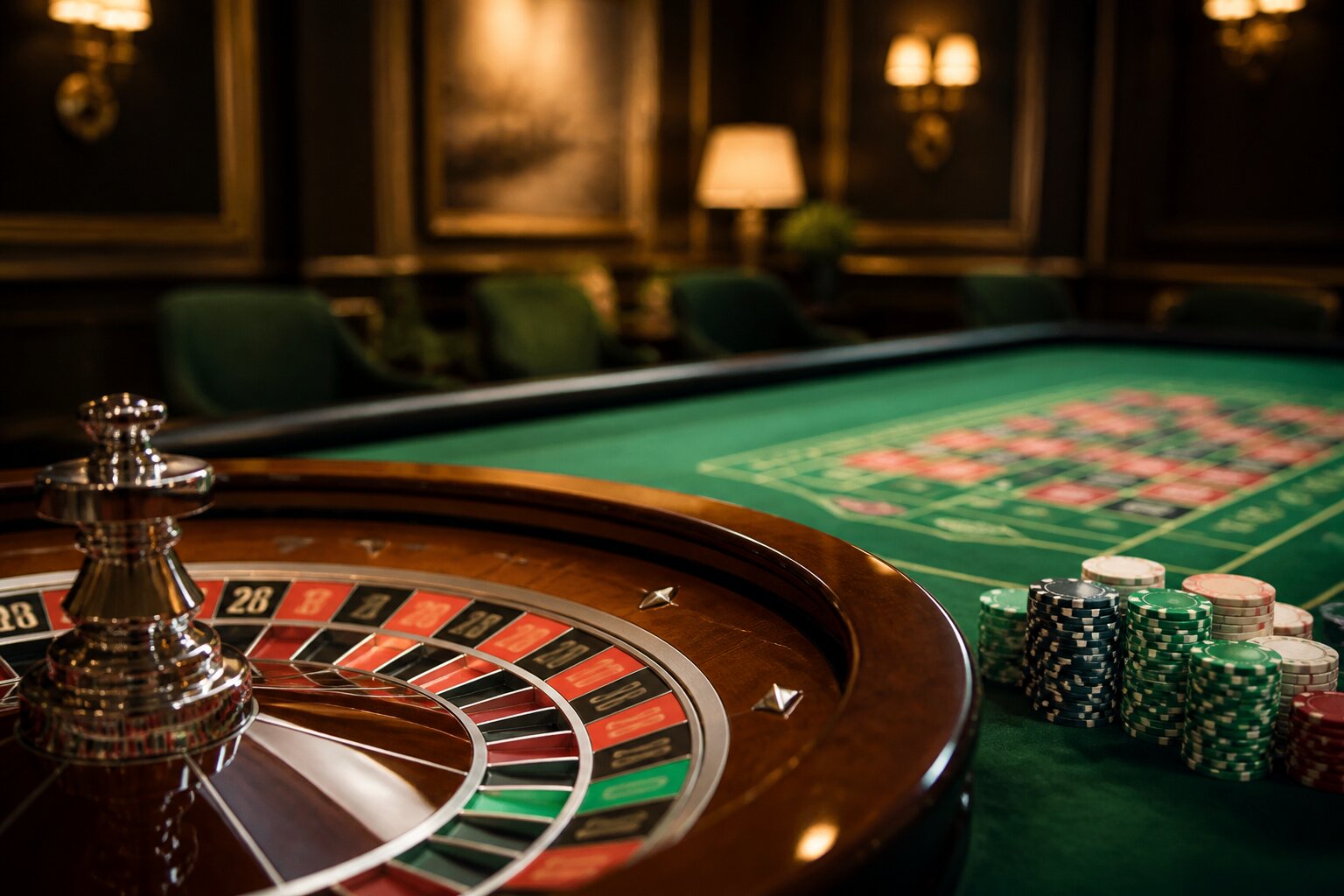
Ever wondered why roulette tables have those distinctive green pockets, or what kind of returns you could get from betting on them? Whether you’re simply curious about the wheel or want to understand what makes the green numbers different, this guide will walk you through the essentials.
Many players focus on red and black, but the greens affect the game’s maths in a specific way. Read on to learn how green payouts work, what the real odds are, and how those odds shape your play.
What Are Green Payouts in Roulette?
Green payouts refer to wins that occur when a player places a straight-up bet on one of the green pockets of the roulette wheel—0 in European roulette, and 0 plus 00 in American roulette. These pockets are set apart from the red and black numbers and are treated the same as any single-number bet for payout purposes.
A straight-up bet on green pays the same ratio as any single-number win, which we’ll cover in detail later. Because there are fewer green pockets than red or black ones, bets on green are less common and typically appeal to people who prefer higher-risk, higher-reward plays. That difference in frequency is part of why the payout for a single-number win is relatively large.
Green pockets also influence other bets indirectly: they affect the proportions of spins that land outside the simple red/black or odd/even outcomes, and so change the overall balance of the game.
How Many Green Numbers Are on a Roulette Wheel?
The quantity of green pockets depends on the roulette variant.
European roulette has one green pocket, 0, among 37 total pockets. American roulette has two green pockets, 0 and 00, among 38 pockets. These are fixed features of the physical wheel and do not change from spin to spin.
Because each green pocket occupies a fixed position on the wheel, the presence of one or two greens changes the distribution of possible outcomes. For example, in European roulette the single zero slightly reduces the chance of red or black outcomes compared with a theoretical wheel without any greens. In American roulette the extra green has a larger effect, which in turn affects the house edge and the relative attractiveness of different bet types.
Why Are Green Spaces Important in Roulette?
Green spaces have a central role in the game’s mathematics. They introduce results that sit outside even-money bets like red/black or odd/even, and that imbalance is what creates the house’s long-term margin.
The inclusion of green pockets means that bets which look even—such as placing money on red—are not exactly 50/50. That slight shortfall is the mechanism by which the game remains profitable for the house over many spins, while still offering a clear and consistent payout structure for single-number wins.
Beyond the maths, the greens contribute to the game’s variety. Because they alter the percentages for different outcomes, they make some approaches more speculative and others more conservative, depending on a player’s appetite and goals.
You’ll find more on how that translates into concrete odds in the next section.
What Are the Odds of Hitting a Green Number?
The odds vary with the wheel type. In European roulette, with one zero and 36 other pockets, there are 37 pockets in total, so the probability of the ball landing on the single green zero is 1 in 37, about 2.7%. In American roulette, with both 0 and 00 among 38 pockets, the chance of landing on any green pocket is 2 in 38, roughly 5.3%.
Those percentages are simple ratios of green pockets to total pockets, and they apply to any single spin because each spin produces one outcome from the fixed set of pockets. Understanding these basic probabilities helps when comparing the relative risk and reward of green bets versus other options on the table.
How Are Winnings Calculated for Green Bets?
A straight-up bet on any single number—including a green pocket—pays 35 to 1 plus the return of the original stake. Concretely, a £1 bet that wins on a single number yields £35 in winnings and your £1 stake back, totalling £36.
This payout is uniform for single-number wins across the wheel, so whether you back 0 on a European wheel or 00 on an American wheel, the ratio is the same. The payout reflects the long-standing convention of roulette payouts rather than the specific probability of the green outcome; the maths behind house edge and probability are separate elements that together define how the game balances risk and reward.
If you’re comparing potential returns, remember that the higher chance of green on an American wheel does not alter the straight-up payout, but it does change the overall balance of the game as described earlier.
Green Bets in European vs American Roulette
- What Is the Difference in Odds?
The core difference is the count of green pockets. European roulette has a single zero, so the chance of any spin landing on green is 1 in 37, or about 2.7%. American roulette has two green pockets, 0 and 00, so the chance there is 2 in 38, or about 5.3%.
That extra green pocket on the American wheel increases the probability of a green outcome and affects the overall maths of the game. It does not change the payout structure for individual bets, but it does change the relationship between payouts and true odds.
Odds and House Edge
Because of the different number of green pockets, the built-in house edge is different between the variants. European roulette’s single zero corresponds to a house edge of about 2.7% on most bets. American roulette’s two green pockets raise that house edge to around 5.26%.
These percentages are inherent to the game variants and are not influenced by player choices during play. Over many spins, the higher house edge in American roulette means the expected return to players is generally lower than in European roulette.
Players often base their preference on factors such as layout, stakes and the relative frequency of rare outcomes. When comparing versions, consider how the number of green pockets affects:
- the frequency of green outcomes,
- the house edge applied to most bets,
- the subtle differences in expected returns across bet types.
All of the above are mathematical characteristics of the wheels rather than effects that can be altered by strategy or bet size.
Myths About Green Payouts in Roulette
Several persistent myths surround the green pockets. One is the idea that green is “due” after long runs of red or black. In reality, the probability on each spin is determined by the wheel’s composition and remains the same from spin to spin. Past results do not change the distribution of outcomes on future spins.
Another misconception is that certain patterns or betting systems can produce a genuine advantage when targeting green numbers. Betting sequences and staking plans do not alter the underlying probabilities or the house edge. They may change how often you win temporarily, but they cannot change the expected return over time.
Finally, some assume green bets carry a secret benefit. The payout structure and the count of pockets are public rules of the game; there is no hidden mechanic that favours players who focus on green.
It’s sensible to keep these points in mind when deciding how you want to play.
FAQs About Green Numbers and Payouts
People commonly ask practical questions about green pockets and the payouts associated with them. Below are clear answers to the most frequent queries.
Can I bet only on green numbers in roulette?
Yes. A straight-up bet can be placed on 0 (or 00 in American roulette) alone. If that number is the result, the standard single-number payout applies.
Are green numbers more likely to hit after a streak of reds or blacks?
No. Each spin produces an independent outcome determined by the wheel’s pockets. Previous sequences do not influence future results.
What is the payout for a green number?
A winning straight-up bet on any single number pays 35 to 1, plus the original stake, following the same rules as other single-number bets.
Does betting on green increase my chances of winning?
No. The probability of a green outcome is fixed by the number of green pockets on the wheel you’re playing. Betting on green does not change those probabilities.
To finish, green pockets are a small but important detail that shapes how roulette behaves as a game. They affect chances, outcomes and the house edge in predictable ways, so knowing how they work helps you understand the game’s balance and make informed choices about how you play.
**The information provided in this blog is intended for educational purposes and should not be construed as betting advice or a guarantee of success. Always gamble responsibly.