
Ever wondered exactly how many numbers spin around a roulette wheel? Whether you’re preparing to place a bet or just curious about the game’s layout, understanding the wheel makes the whole experience clearer and more interesting.
Roulette is one of the most recognisable casino games, with a wheel, a small ball and a table of betting options that all link back to those numbered pockets. In the sections below we’ll explain how many numbers and slots you’ll find on different wheels, how they’re arranged and what that means for the game.
Keep going — the details are straightforward, and they help make sense of what’s happening every time the wheel turns.
What Is a Roulette Wheel and How Does It Work?
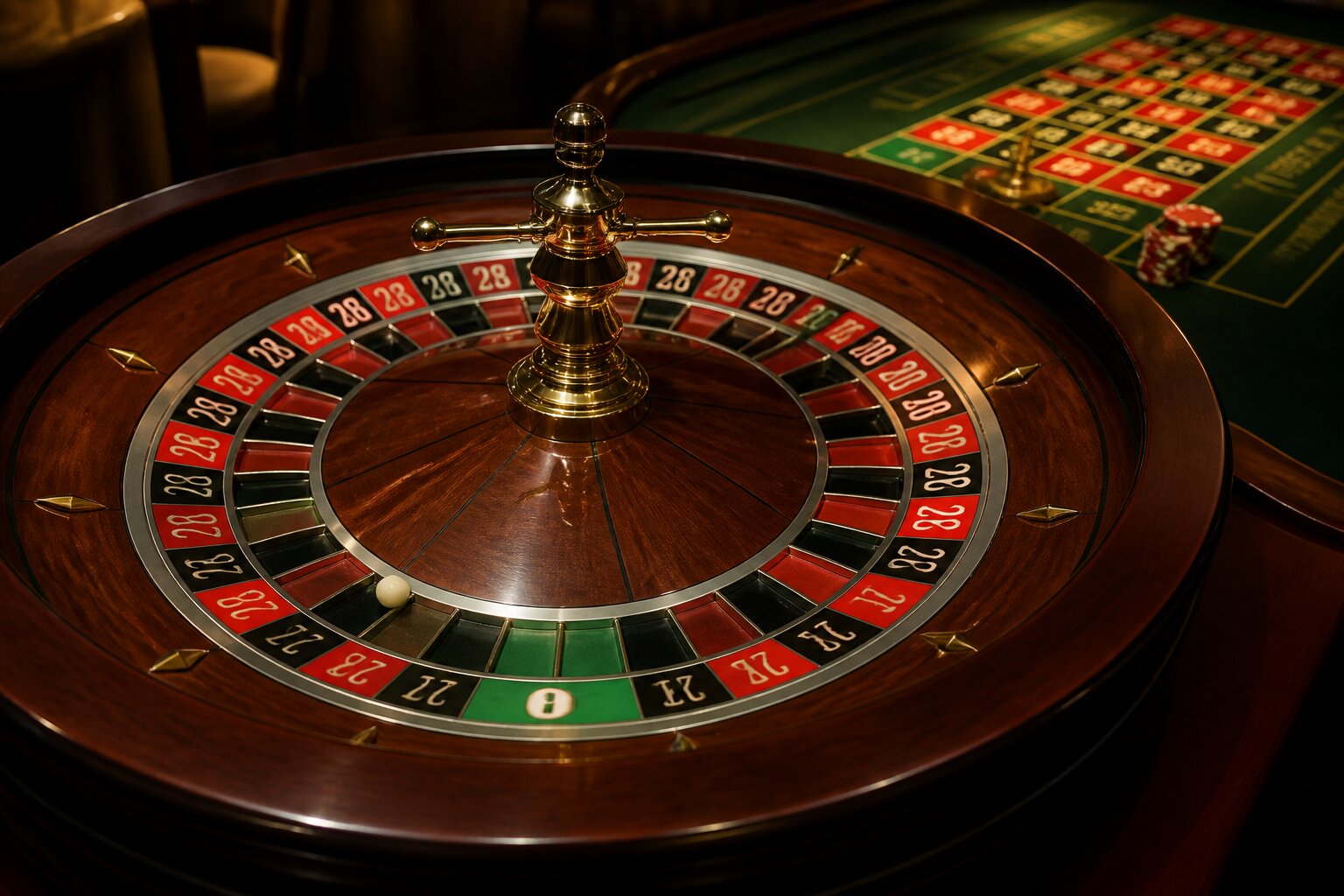
A roulette wheel is a spinning wheel divided into numbered pockets. A small ball is released around the rim in the opposite direction of the spinning wheel, and the pocket where the ball eventually settles determines the winning number.
The main parts are simple: the wheel itself, the bowl that guides the ball, the pockets or slots and the ball. Numbers are coloured red or black, except for green pockets which hold the zero or double zero. A live croupier runs the wheel in physical casinos; online versions use certified random-number generation to replicate the same outcomes.
Roulette is designed so each spin produces an independent result. That means past results don’t affect future ones. The game’s structure is aimed at fairness and clear, consistent rules; keep your play within limits and treat the activity as entertainment.
What Is the Number Layout on a Roulette Wheel?
Numbers on a roulette wheel are not placed in simple counting order. Instead, they follow a specific sequence that spreads out high and low numbers, odds and evens, and the two colours to avoid clustering.
European-style wheels contain 37 pockets, numbered 0 to 36, with a single green zero and red/black alternating across the other 36 numbers. American-style wheels have 38 pockets: the numbers 1 to 36 plus two green pockets labelled 0 and 00. The extra green pocket on the American wheel changes the distribution slightly but the alternating red/black pattern for the other numbers is preserved.
These arrangements create balance across the wheel so that spins remain unpredictable in practice. The layout is consistent on properly maintained wheels and on regulated online games.
How Do European and American Roulette Wheels Differ?
The clearest difference is the number of green pockets. A European wheel has one zero; an American wheel has both a zero and a double zero. That single extra pocket alters the numerical composition of the wheel and the relative payouts for certain bets.
European-style wheels are widely used in many casinos and online platforms; American-style wheels are common in North American venues. Beyond the extra green pocket, both versions use the same methods of play and the same general alternation of red and black numbers.
If you prefer a particular style, check the table rules and layout before playing. The difference affects the house’s percentage edge over the long run, which is a mathematical outcome of the wheel’s structure.
Why Are There Green Zero Slots on a Roulette Wheel?
Green zeros exist to create a mathematical advantage for the house. Because standard even-money and simple proposition bets lose when the ball lands on a green pocket, those pockets shift the expected return in the casino’s favour.
European wheels, with a single zero, produce a smaller house edge than American wheels with a double zero. That is a direct consequence of the number of green pockets in play. The zeros also serve a practical role in balancing the wheel’s sequence so numbers and colours are distributed across the layout.
These design elements are part of the game’s rules and casino economics rather than signalling any strategic opportunity for players.
Can You Find Other Variations of Roulette Wheels?
There are a few recognised variations beyond the standard European and American wheels, though most casinos and online operators stick to those two. Differences tend to be in table rules and betting options rather than the basic wheel mechanics.
Some versions alter the payout for particular bets or introduce relief rules when zero appears, which can change a player’s expected return in specific situations. It’s worth reviewing the table or game rules before you play so you know how those variations affect outcomes.
French Roulette Differences
French Roulette uses the same 37-pocket wheel as the European version, but its distinguishing features are table rules such as La Partage and En Prison. These rules give players partial protection on even-money bets if the ball lands on zero: La Partage returns half the stake, while En Prison can suspend the bet for a following spin under certain conditions.
Those rules change the effective expectation for particular bet types and are popular among players who prefer a slightly different risk profile. They don’t alter how the wheel itself operates, but they do affect the way bets resolve when zero appears.
How Are Numbers Arranged on a Roulette Wheel?
The wheel’s number sequence is carefully chosen to separate groups of similar numbers and colours. That arrangement mixes high and low, odd and even, and both colours around the circumference so that no segment of the wheel is dominated by one type of pocket.
Manufacturers and casinos use the established sequence for each wheel type so that the distribution is consistent across different wheels. The goal is to ensure spins remain independent and outcomes evenly dispersed over time, which supports the fairness of the game.
Because the sequence is fixed, any attempt to find predictive patterns in spins misunderstands how the wheel was designed.
Are There Any Myths About Number Distribution?
Several persistent myths surround roulette, but most stem from misunderstandings about probability and independence.
One common belief is that certain numbers are “hot” or “cold” and therefore more or less likely to appear. In reality, each spin is an independent event with the same mathematical chance for each pocket on that spin. Another misconception is that the wheel’s layout can be used to predict outcomes; the layout is intended to balance the distribution of numbers and colours, not to create exploitable patterns.
Understanding these points helps you approach the game with clear expectations. Roulette’s structure and rules determine its long-term behaviour; knowing how those elements work is more useful than chasing supposed trends. Overall, the wheel’s design, the number layouts and any special rules on a table all combine to form a game that’s consistent and straightforward to follow.
**The information provided in this blog is intended for educational purposes and should not be construed as betting advice or a guarantee of success. Always gamble responsibly.