
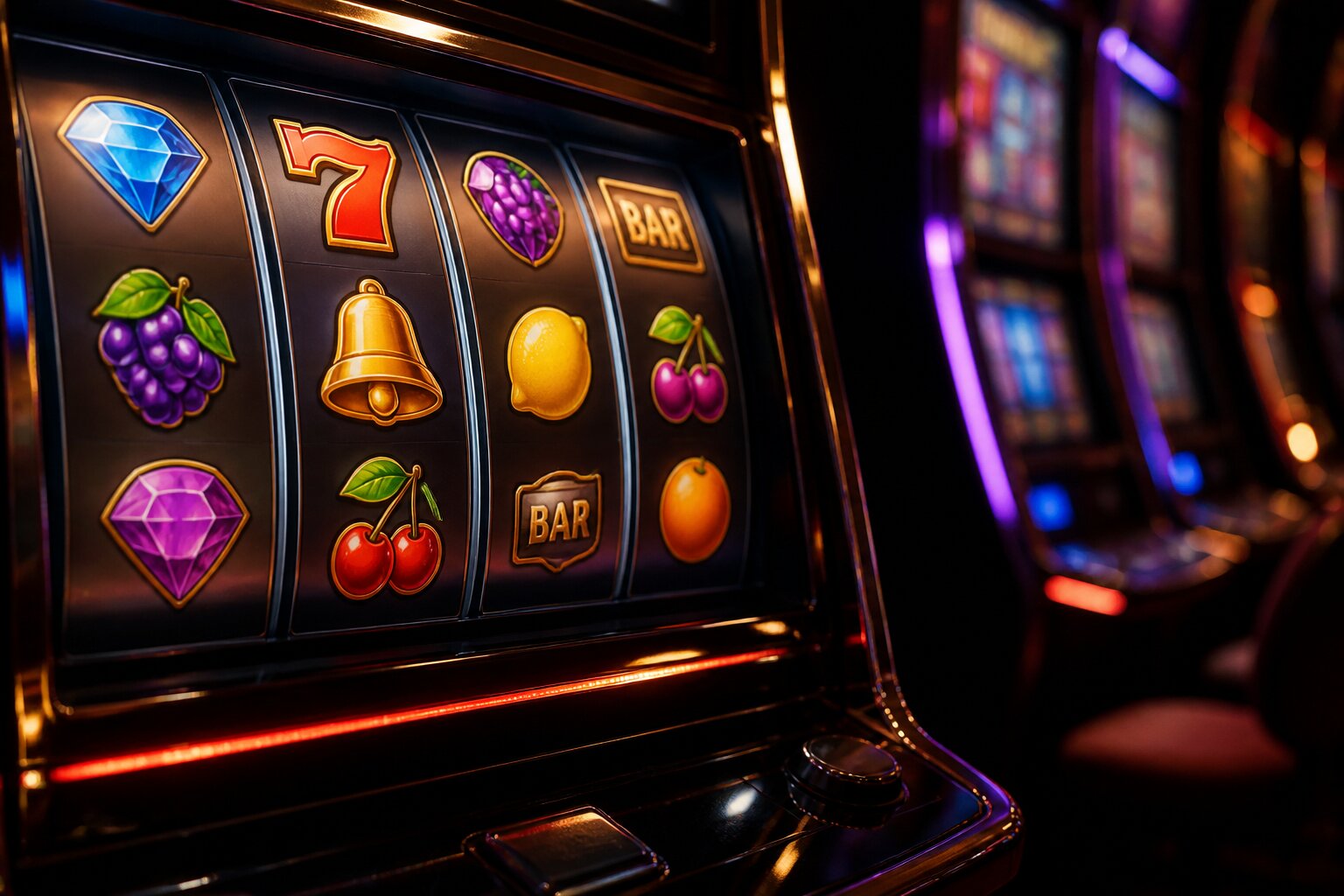
Ever wondered why some slot games seem to pay out more often than others? Or why certain symbols on the reels make your heart race every time they appear?
Understanding those symbols isn’t just about enjoying the visuals — it helps explain how wins are formed, how often payouts occur, and what ultimately determines the cash available to withdraw. Read on to see how symbol design, placement and game mechanics all fit together.
Understanding Slot Machine Reels and Symbols
Slot machines use spinning reels, most commonly three or five, and each reel carries a set of symbols. When the reels stop, the combination that appears across the active paytable or pattern determines whether a win occurs and how much that win is worth, according to the game’s paytable.
Some symbols are simple value carriers; others unlock features. Wilds commonly substitute for other symbols to complete winning lines, while scatters usually trigger free spins or bonus rounds when a certain number land anywhere on the reels. The selection and distribution of symbols on each reel shape which combinations are possible and how often they can appear.
Beneath the surface, a Random Number Generator controls outcomes so every spin is independent. That means symbol arrangements set the range of possible results, while the RNG determines which result actually appears on any spin. This combination of symbol design and randomness is what creates the game’s rhythm and variety. Next, we’ll look at the different types of symbols you’ll encounter and why they matter.
What Types of Symbols Appear on Modern Slot Machines?
Modern slots mix standard symbols with several special types to create layers of play. Standard symbols usually fit the game’s theme and form the core of regular payouts. Special symbols add variety and can unlock separate ways to win or trigger features that change the payout mix for a period, often affecting how long sessions last and how volatile outcomes can feel.
Games vary widely in how many special symbols they include and how frequently those symbols appear. Some titles rely mostly on standard symbols with only one or two special types, while others build entire game mechanics around multiple special icons and feature wheels. These design choices shape the player experience, from steady, low-volatility games to high-volatility titles where big wins are rarer but potentially larger.
Standard Symbols vs Special Symbols
Standard symbols are the common images that form the bulk of winning lines. They tend to pay smaller amounts more frequently and are often linked to the game’s aesthetic, such as fruit, gems or characters. Because they appear more often, they help provide a steady rhythm of small wins and keep spins engaging.
Special symbols are designed to change gameplay dynamics: they might substitute for others, activate bonus games, or multiply wins. They occur less often and are typically the keys to the more distinctive features within a slot. The balance between these two groups is a deliberate choice by game designers to create a particular feel and volatility. Where special symbols are more frequent, the game may offer more frequent bonus interactions; where they are rarer, the game usually emphasises bigger, less common payouts.
How Wilds and Scatters Work
Wilds act like substitutes and make it easier to complete winning combinations, though they rarely replace other special symbols. They can appear in different forms, such as expanding wilds that cover a whole reel, sticky wilds that remain for several spins, or stacked wilds that increase the chances of multiple wins on a single spin. Each variant changes the gameplay in small ways and influences the likelihood of seeing winning combinations.
Scatters do not need to land on a payline to have an effect; a set number appearing anywhere on the reels often unlocks free spins or a bonus feature. Scatter-triggered features may include pick-and-win games, multipliers, or entry to a separate bonus round with different rules. Because scatters only need to appear anywhere, they introduce a different kind of excitement compared with line-based wins, but they are usually less common and are balanced within the game’s overall return profile.
Both types broaden the range of outcomes and can temporarily change the scale or frequency of payouts, which in turn affects how exciting a session feels. Understanding the role and frequency of wilds and scatters, and how they interact with standard symbols, helps players recognise the intended risk and reward balance of a game without implying any guaranteed results.
How Do Reel Symbols Influence Payout Frequency?
The way symbols are distributed across reels is a key factor in a game’s payout pattern. While the RNG decides each spin’s result, the underlying distribution of symbols controls how often particular combinations can occur, which establishes the game’s payout rhythm.
Some symbols are deliberately rarer and tied to larger prizes, while others appear frequently and produce smaller, more common wins. This mix defines a slot’s volatility: games favouring frequent small wins will have many common symbols, whereas games aiming for bigger, less frequent prizes will include more high-value, rare symbols.
Payline design also matters. Slots with many paylines or cluster pays increase the number of ways symbols can combine into wins, while simpler payline structures limit those possibilities. Together, symbol rarity and payline structure shape how often wins occur and how substantial they tend to be. In the next section, we explore whether those wins then translate directly into withdrawal amounts.
Can Reel Symbols Affect Withdrawal Amounts?
Symbols determine the value of individual wins, so by extension they define how a player’s balance grows. Larger or rarer symbol combinations will produce bigger prizes, increasing the cash available for withdrawal. However, no single symbol or spin changes withdrawal processes or rules.
Withdrawals depend on the total funds accumulated in the player account and on the operator’s procedures, such as verification and payment method options. Symbol outcomes create the balance that can be withdrawn, but the act of withdrawal itself is a separate administrative process controlled by the operator and subject to their terms and conditions.
All game outcomes remain governed by random generation and the pre-set paytable, so while symbols shape how winnings appear, they do not directly alter how withdrawals are handled. With that distinction made, it’s worth considering how symbol placement combines with these mechanics to set jackpot chances.
What Is the Link Between Symbol Placement and Jackpot Probability?
Jackpots are typically tied to very specific symbol arrangements, often requiring particular symbols to land on certain reels or paylines. Developers control jackpot probability by deciding how often those jackpot-triggering symbols appear and how they’re located on the reel set.
Because those placements and frequencies are fixed at game design, jackpot odds are effectively baked into the slot before anyone plays. The RNG simply selects results within the framework of that design. Players cannot influence the chance of a jackpot by changing their behaviour or timing; every spin offers the same programmed possibilities.
Understanding that jackpot probability is a product of design helps set realistic expectations about chances and potential wins. To clarify how players can read those odds in practice, the next section looks at paytables and how they spell out symbol values.
How Pay Tables Interpret Symbol Values
A paytable is the reference page inside a slot that lists each symbol and the prizes associated with landing certain numbers of them on an active line or pattern. It shows the exact payouts for combinations, explains special symbol functions and outlines any feature triggers.
Higher-value symbols pay more for the same match count, while lower-value symbols provide smaller, more frequent rewards. The paytable may also describe how multipliers, stacked symbols or expanding wilds change potential returns during feature rounds. Reviewing it gives a clear picture of the prize structure, which helps set expectations without affecting the game’s inherent randomness.
With paytables understood, it becomes clearer why bonus symbols are used and how they might affect a player’s experience — which is what the next part examines.
Do Bonus Symbols Change Withdrawal Patterns?
Bonus symbols are designed to unlock additional parts of the game — free spins, pick-style features or multiplier rounds — and those features can produce winnings that differ in scale from the base game. They increase the variety of prize opportunities, but they do not change the mechanics of withdrawing funds.
When bonus symbols trigger a feature, any prizes awarded become part of the player’s balance once the feature ends. Whether those amounts are small or large depends on the feature’s design. Operators still require that all winnings meet their verification and processing rules before funds are released, so bonuses affect only the composition of winnings, not the withdrawal procedure itself.
Triggers and potential prize sizes vary between games, so looking at how a particular slot handles bonus symbols helps indicate what kinds of outcomes they typically produce. That brings us to some common misunderstandings about symbols and payouts and the facts behind them.
Myths About Symbols and Payouts: What Are the Facts?
There are several persistent myths about symbol behaviour and payout patterns. One is that machines can go into so-called hot or cold streaks, or that particular symbols are “due” to appear. In reality, each spin is independent and determined by the RNG, so past spins do not influence future results.
Other myths suggest that player actions such as timing a button press or switching machines affects symbol appearance. Because outcomes are generated instantly and randomly, those actions have no impact on the result. The only reliable information about a slot’s behaviour comes from its paytable and published return-to-player percentage.
Legitimate games operate under regulatory standards that require fairness and transparency. Those protections mean game mechanics and payouts follow set rules rather than superstition. With the facts clear, players can better evaluate games on design and features rather than on unproven strategies.
Compliance and Responsible Play
Reputable operators follow rules that ensure games are independently tested and fair, and they provide clear details about paytables and any bonus conditions. That transparency helps players understand how wins are formed and what the options are for withdrawing funds.
Approach play as entertainment and use the information in paytables and game rules to make informed choices about volatility and feature structure. If gameplay raises concerns about spending or control, tools such as deposit limits and self-exclusion are available through most operators to help manage activity.
Knowing how symbols shape wins, how paytables explain values, and how jackpots are coded gives a complete picture of what happens behind the reels. With that knowledge, players can enjoy the design and features of a game while keeping decisions grounded in clear, factual information.
**The information provided in this blog is intended for educational purposes and should not be construed as betting advice or a guarantee of success. Always gamble responsibly.