
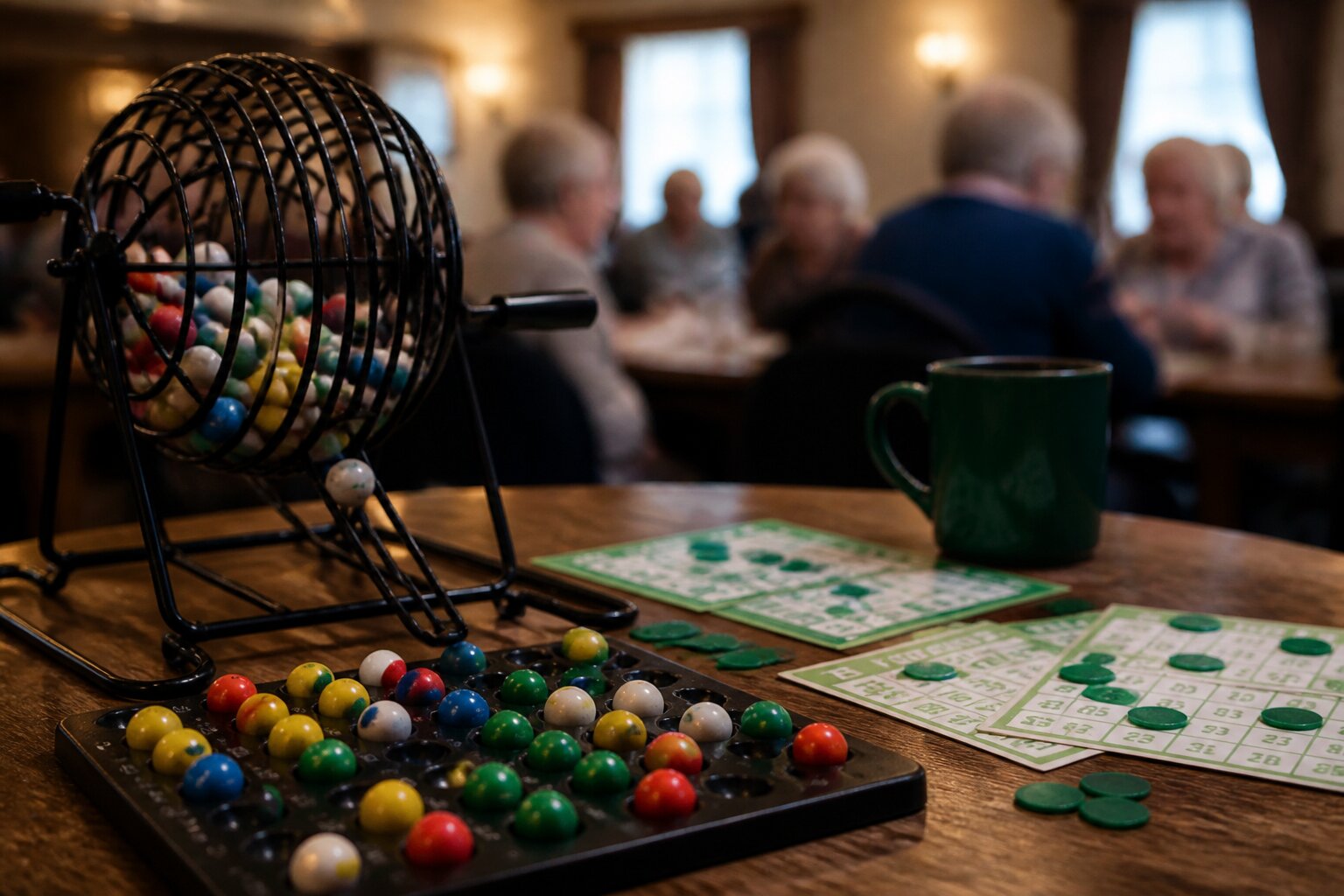
Ready to dive into the lively world of Irish Bingo? Whether you’re a complete beginner or a regular player, this guide explains what you need to know in clear, friendly terms.
You’ll find how the game is played, the rules you’re likely to meet, the charming number calls that give Irish Bingo its character, and how prizes are usually handled. Read on — each section builds on the last so you can follow the game from ticket purchase to prize confirmation.
What Is Irish Bingo?
Irish Bingo is a social game played by adults for entertainment and modest prizes. It takes place in community halls, clubs and online sites across Ireland, always operating within the law.
Tickets display a grid of numbers set in random order. A caller draws numbers using a mechanical or electronic method, and players mark matching numbers on their tickets. The objective is to complete a predefined pattern — commonly a single line, two lines or a full house — and signal the win so it can be checked and paid.
These sessions are as much about the company and the atmosphere as the game itself, and the number calls add character that many players enjoy.
How Do You Play Irish Bingo?
Playing is simple. You buy your ticket, listen as numbers are announced and mark them off on your card. Keep track of the pattern required for that specific game, because winning depends on matching that shape before anyone else.
In halls you mark numbers by hand with a marker. Online platforms usually mark them automatically. You should also check your ticket or account before play to make sure you understand the card layout and any special rules for that session.
When you believe you have the winning pattern, you do one of the following:
- alert the caller in a physical hall, or
- press the claim button on the online platform.
Organisers verify the card or account before any prizes are awarded. They will confirm the numbers and the pattern, and follow any published procedures for prize payment and time limits for claims.
This process is straightforward, but staying attentive helps avoid missed calls or marking mistakes. Remember to play responsibly and only take part if you are of legal age in your area.
Game Format And Card Types
Irish Bingo appears most commonly in two formats: 90-ball and 75-ball, named after how many balls are used.
90-ball cards have three rows and nine columns, with some blank spaces. Prizes typically go to the first player with one complete line, two complete lines, or a full house. 75-ball cards use a 5x5 grid with a centre space often marked as free; patterns vary and can include shapes as well as straight lines.
There are also occasional variations such as 80-ball and themed games; each has its own card layout and winning patterns, so check the rules before joining.
Now that you know the formats, the next section explains the common rules that keep games fair and orderly.
Common Rules And Winning Patterns
Games open with clearly stated rules and the pattern needed to win. Tickets must be purchased before the game starts; late entries are not permitted once calls begin. Players mark numbers as they are announced and only claim a prize when they have completed the required pattern.
Typical winning patterns are:
- Single Line: all numbers in any one horizontal row
- Two Lines: any two horizontal rows on the same ticket
- Full House: every number on the ticket
Some games offer additional patterns or side prizes, especially with 75-ball formats. If you think you’ve won, alert the caller or press the claim button; the operator will verify your card before awarding any prize.
What Are Irish Bingo Number Calls?
One of the most recognisable aspects of Irish Bingo is the number calls themselves. Callers use short phrases, rhymes or familiar expressions to announce each number, creating a lively tone and a sense of tradition during play.
These calls do not affect the rules or the odds; they are a cultural flourish that many players enjoy. They can help keep the mood upbeat, make the game easier to follow, and give regulars familiar cues that add to the social side of the event.
Different venues sometimes use local sayings or personal variations. As a result, you might hear new or unexpected lines depending on where you play. That variety is part of the charm and can reflect local humour, history or even the caller’s personality.
Reasons people use calls often include:
- creating atmosphere and entertainment for players
- making numbers easier to remember or recognise
- preserving tradition and local character
- helping callers maintain a steady rhythm during a session
If you have ever wondered why a number gets a particular phrase, the next section gives examples of those classic calls. Remember to play responsibly and that the calls are for fun rather than any part of the game’s mechanics.
List Of Traditional Irish Number Calls
Below are some well-known number calls you might hear in Irish Bingo. Each phrase is a light-hearted way to announce the number and often sparks a smile from the room. These calls help create a familiar, social atmosphere without being about the stakes.
Sample Number Calls And Their Phrases
1 – Kelly’s Eye
A short, familiar call for number one that many players will recognise. It is often used to kick off a round with a touch of tradition.
8 – Garden Gate
A rhyming phrase used for number eight that adds a rhythmic feel to the draw. Callers use the rhyme to make the number more memorable.
17 – Dancing Queen
A playful reference often used for seventeen, borrowing a popular song title. It brings a bit of fun and cultural nods into the game.
22 – Two Little Ducks
A visual, rhyming image that makes twenty-two easy to remember. The phrase is popular because it paints a simple picture for players.
90 – Top of the House
The announcement for the highest number in a 90-ball game, signalling the top of the range. It flags the end of the number set in a clear, traditional way.
Callers vary their lines for several reasons:
- to add rhythm and pacing to the session
- to help players remember numbers more easily
- to introduce humour and lighten the mood
- to reflect local or personal tradition
These are examples rather than an exhaustive list. Callers often adapt, combine or invent lines to keep the atmosphere engaging and familiar.
How To Mark Your Card Correctly?
Accurate marking matters whether you are playing in person or online. In halls, use a proper bingo marker or felt-tip pen to mark each called number clearly and only on the matching square. Make each mark neat so it cannot be mistaken for another square or for an accidental smudge.
Double-check the number before you mark it. Once a number is marked on your card it is usually treated as your responsibility, so if you are unsure, ask an attendant before making the mark.
If you make a mistake, alert a steward or organiser straight away. They can advise whether the card can be corrected or if special steps are needed to resolve the error.
Online play is usually more forgiving, with the system marking numbers automatically and showing your progress on screen. Still, keep an eye on the display so you do not miss a claim opportunity or fail to notice a mis-mark caused by a lag or visual glitch.
When you believe you have a winning pattern, confirm before claiming. Take a moment to check each relevant square so you are confident of the win. Organisers always verify cards to ensure prizes go to the correct player, and may pause play while they complete that check.
Prize Structures And Typical Payouts
Prizes depend on the format, the number of tickets sold and the specific rules for a session. Generally, prize pools grow with ticket sales, and payouts are often set for a first line, two lines and a full house. Some games feature additional rewards for special patterns or advertised jackpots.
Payouts are typically made in cash at physical venues or credited to an account online after verification. The organiser’s terms and conditions will state how prize funds are allocated and any limits that apply.
Keep expectations realistic: prizes are intended to add excitement to the game, and the structure is designed to distribute winnings fairly among participants.
Final note: enjoy the social side of bingo and play within your means; organisers verify wins and prize procedures to keep the experience clear and straightforward.
**The information provided in this blog is intended for educational purposes and should not be construed as betting advice or a guarantee of success. Always gamble responsibly.