
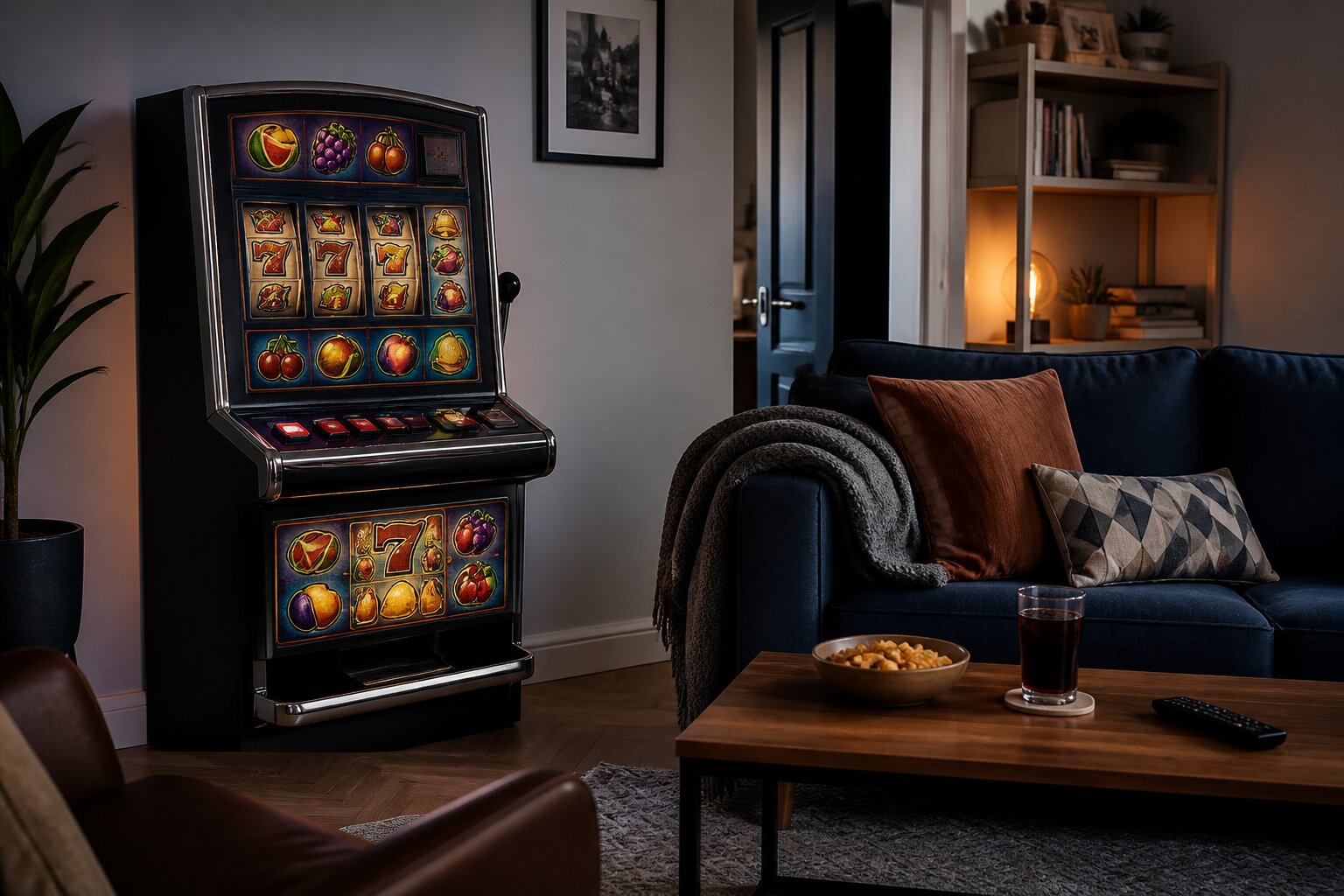
Ever wondered if you can keep a slot or fruit machine in your living room, like the ones in pubs or arcades? You’re not alone. With vintage machines becoming collectible and modern cabinets easy to buy online, it’s worth knowing the rules before you start shopping.
This guide explains what the law says, which machines are acceptable for personal use, and what to watch for if you plan to let others play or sell a machine. Read on and you’ll know exactly where you stand.
UK Laws on Private Ownership of Slot and Fruit Machines
The Gambling Act 2005 is the main piece of legislation governing slot and fruit machines in the UK. Under that law, private ownership is permitted provided the machine is strictly for the owner’s personal use at home. That means no charging people to play, no accepting stakes, and no operating the machine as a revenue-generating device.
Public use, supplying machines for commercial play, or offering prizes in return for payment requires licences and registration. Older statutes have been superseded, so take care to consult current official guidance before buying or using a machine. Breaking the rules can lead to fines, seizure of equipment, or other legal action, so it pays to be clear about the boundaries.
What Licences or Permits Are Needed?
For machines kept solely for private use at home, you do not need a licence. These personal machines used only by family and friends for non-commercial entertainment are generally outside the scope of licensing requirements.
The moment the machine moves beyond private entertainment, the regulatory picture changes and licences are required. This can be the case when it is used in settings where there is a commercial element or public access. Typical situations include:
- in a bar, pub or other licensed premises where customers attend
- at a paid event, such as a ticketed fair or festival
- where money changes hands, such as chargeable play, entry fees or prizes
Licences and permits are issued and enforced by national and local regulators, and the exact permissions depend on how and where the machine will be used. Different activities may need different types of consent, and there can also be additional obligations for premises, operators and organisers.
If there is any doubt about an intended use, check with the regulator or local authority before you deploy the machine so you do not inadvertently fall outside the permitted activities. Seeking clarification early can help you understand the correct permissions, avoid enforcement action and ensure you meet any conditions attached to a licence.
Restrictions on Machine Types and Features
Not every machine is treated the same under the law. Traditional, older fruit machines that operate mechanically and do not pay out significant cash prizes are typically acceptable for private ownership. By contrast, modern machines that allow high-stakes play, rapid automated cycles, networked jackpots, or sizeable cash payouts attract stricter controls.
A constant rule is that no one under 18 may use a gambling machine, regardless of its age or complexity. If a machine’s features suggest it is primarily designed for commercial gambling — for instance large cash returns or connection to progressive jackpots — it may be unsuitable for home ownership. When in doubt, ask a reputable supplier or consult official guidance to confirm a machine’s status.
If you’re thinking about a particular model, look into its payout mechanisms and whether it has been modified from its original specification; alterations can affect its legal classification.
Can You Use Slot Machines for Private Events or Parties?
Having a machine at a small gathering is possible but delicate in legal terms. The safe route is to keep any home machine purely for entertainment with no charge to play and no monetary prizes. Introducing bets, stakes, or cash rewards, even among friends, can transform a private pastime into regulated gambling.
Age restrictions still apply: under-18s must be excluded. If guests are invited specifically to play a machine and payment is required, the activity would likely need licensing and should not proceed without it. For casual social settings where the machine is a novelty rather than a way to collect money, the legal risk is low provided these boundaries are respected.
Buying, Selling, and Transporting Slot Machines Legally
When purchasing, choose sellers who can prove lawful ownership and provide documentation such as receipts and serial numbers. Ask for a clear chain of title where possible, and check for any liens or outstanding finance. Verifying the machine’s serial number against manufacturer records or databases can help confirm it is not stolen or subject to dispute.
Selling carries similar responsibilities. Make reasonable enquiries about the buyer’s intended use, retain copies of identity or company documents where appropriate, and provide a detailed receipt that records the serial number and condition of the machine. Keeping accurate records of the sale can protect you if questions arise later from enforcement agencies or former owners.
Transport requires care. Secure the cabinet and internal components to prevent damage in transit, and use suitable packaging and handling equipment. Retain proof of ownership and a copy of the sales agreement or receipt while the machine is being moved. For guidance on moving machines and why venues sometimes remove them, see Why Do Casinos Move (and Remove) Slot Machines?
If you use a courier or removals firm, inform them about the nature of the item so it is handled appropriately and consider arranging insurance that covers loss or damage in transit. Keeping a clear paper trail reduces the risk of disputes or enforcement queries later on, and helps demonstrate you have acted with reasonable care and compliance.
Penalties for Illegal Ownership or Use
Using a machine in breach of the law can attract serious consequences. Authorities may confiscate equipment, impose fines, or pursue criminal prosecutions depending on the nature and scale of the offence. In some cases operators may also face civil penalties, orders to pay compensation or the loss of licences and permissions needed to trade.
Examples of activities that commonly lead to enforcement action include:
- allowing minors to use machines
- operating without the required licences or permissions
- facilitating unlicensed gambling
The severity of penalties will vary by jurisdiction and the circumstances of the case, including whether the breach was deliberate or repeated. Convictions can lead to criminal records, substantial financial penalties and long-term harm to a business or personal reputation.
If you are uncertain about whether a planned use is permitted, consult the relevant regulator or seek professional legal advice before proceeding. Taking that step reduces needless risk and helps protect both you and anyone who might use the machine.
Common Myths About Slot Machine Ownership Explained
There are a few persistent misunderstandings about private ownership of slot machines. It helps to separate these myths from the legal position to avoid problems later.
Common false beliefs include:
- Private games for money among friends are legally acceptable. They are not lawful unless the correct authorisation is in place.
- Vintage machines are exempt from regulation. The law can apply to machines regardless of age.
- Under-18s can play under supervision at home. That is never permitted.
Each of these points has real consequences. Running unauthorised gambling can lead to enforcement action, whether the machine is brand new or a collector's item. Allowing under-18s to play, even in a private setting, risks breaking age-restriction rules and could result in penalties.
A further misconception is that private sales need no checks. In reality, reasonable due diligence is important for any transaction. Sellers and buyers should:
- Verify whether the machine requires a licence or registration before it changes hands.
- Check the machine's history to ensure it has not been used unlawfully.
- Keep records of the sale, including contact details and a clear description of the item.
Taking these straightforward steps reduces the risk that a machine will be used illegally after the sale and helps protect both parties.
Where to Get Further Advice or Guidance
If you need certainty about a particular machine or situation, it makes sense to consult official sources and professionals. Regulations evolve and local interpretation can vary, so checking current guidance prevents mistakes.
The Gambling Commission
The Gambling Commission provides comprehensive information on machine classifications and licensing requirements. Their resources are a good starting point for technical and legal queries.
Local Councils
Local authorities deal with licencing in their areas and can advise on rules that affect commercial use or events. If you plan to move a machine into a public or semi-public setting, your council can clarify the local requirements.
Professional Help
For complex situations, professional legal advice can resolve uncertainties and offer tailored guidance, particularly if a machine’s status is unclear or if you intend to buy, sell, or use a machine in a borderline way.
We aim to provide accurate, up-to-date information and encourage readers to check official guidance or consult experts when necessary. If you have a specific machine in mind or a scenario you’d like help with, contact us and we’ll assist you further.
**The information provided in this blog is intended for educational purposes and should not be construed as betting advice or a guarantee of success. Always gamble responsibly.