
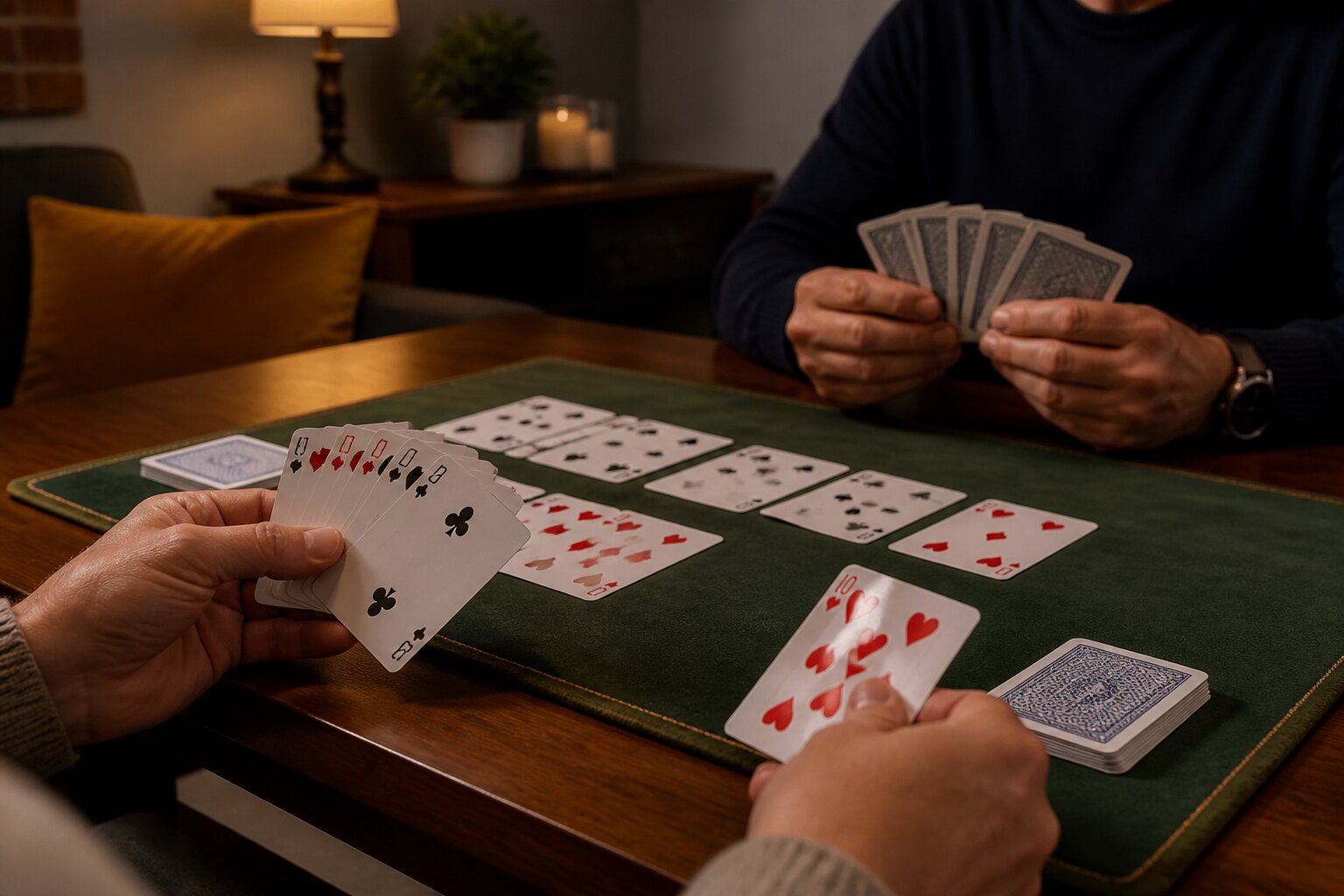
Rummy is a classic card game that combines pattern recognition and tactical play. Whether you want a casual game with friends or a more focused session, understanding the rules helps you get straight to the enjoyable part.
This guide covers the essentials — from the number of cards you need to how hands are formed and scored — with clear examples so you can start playing with confidence.
What Is the Rummy Card Game?
Rummy refers to a family of card games where the objective is to arrange your hand into valid combinations known as sets and runs. Sets are groups of cards of the same rank from different suits, while runs are consecutive cards in the same suit. Players build these combinations by drawing and discarding cards as the round progresses.
Most versions use a standard 52-card deck, sometimes with jokers acting as wild cards. While the precise rules vary between formats, the core play—drawing, melding, and discarding—remains consistent. The round ends when a player forms all required combinations and declares their hand, at which point other players reveal theirs for scoring.
How Many Cards Are Needed to Play Rummy?
The number of cards dealt depends on the variant and the number of players. In the most commonly played form, each player receives 10 cards when there are more than two players, and 7 cards in a two-player game.
Common variant card counts and deck setups include:
- Gin Rummy: typically 10 cards per player and played with a single 52-card deck.
- Indian Rummy: usually 13 cards per player and often played with two decks plus jokers to create a larger pool.
- Two-player games: many casual or club games reduce the hand size to 7 cards each for quicker play.
For larger groups, or when house rules require it, two decks including jokers are used to ensure there are enough cards for longer hands and more meld possibilities. Jokers may be used as wild cards, but their exact role can vary by variant and by the rules you agree before play.
Always confirm the specific variant’s dealing rules and any local or house variations before you begin to avoid confusion. Agreeing the number of decks, whether jokers are used, and the hand size will keep the game fair and enjoyable for everyone.
How Do You Deal Cards in Rummy?
-
After shuffling, the dealer deals the agreed number of cards to each player, one at a time. Dealing singly helps distribute cards fairly and makes it easier to spot mistakes. The exact number of cards depends on the variant being played and the number of players; for example, some common versions use 10 cards each.
-
The remaining cards form a face-down draw pile in the centre of the table. Players draw from this pile during play when they need new cards.
-
The top card of the draw pile is turned face-up to start the discard pile. The discard pile is visible to all players and the top card is the only one available for immediate take.
Play begins with the player to the dealer’s left and proceeds clockwise. The dealer role usually rotates so everyone gets a chance to deal and observe how different hands develop. If a misdeal is discovered while dealing, the usual practice is to reshuffle and redeal to correct the error.
Which Cards Are Used in Rummy?
Rummy typically uses a standard deck of 52 cards: four suits from Ace through King. The Ace may be played either high or low in many variations, so check the rules for the version you are playing.
Some variants include one or more jokers. These act as wild cards and are used to make it easier to complete combinations, but exact usage varies between versions.
Common joker roles include:
- substituting for any missing card in a set of the same rank,
- standing in for a specific card in a run, and
- being assigned a fixed value or restriction in some variants.
When multiple decks are used, jokers from all decks are usually included. Always check your chosen variation to see whether jokers are permitted, how many are used, and how they should be handled.
What Are the Basic Rules of Rummy?
Each turn, a player draws one card from either the draw pile or the discard pile, then discards one card to the discard pile. The goal is to form sets (three or four cards of the same rank from different suits) and runs (three or more consecutive cards of the same suit). When a player has arranged all their cards into valid combinations and has no extra cards, they declare and show their hand to end the round.
Wild cards, such as jokers when allowed, can be used to complete combinations but may be subject to specific constraints depending on the variant. Scoring rules also vary, so clarify them at the start of play.
What Is the Aim of Rummy?
The aim is to organise all the cards in your hand into the required sets and runs before the other players do. A set is typically three or four cards of the same rank, while a run is a sequence of three or more cards in the same suit. The first player to arrange their hand into valid combinations and declare a win usually ends the round.
Doing this efficiently requires observing which cards opponents take or discard and adapting your own strategy. Pay attention to discarded cards to infer the combinations other players are building, and notice which cards they avoid. That information helps you decide whether to hold on to a card, exchange it, or discard it safely.
Success combines careful planning, pattern recognition, and reacting to the changing state of play. Planning involves deciding which combinations to aim for early on, pattern recognition helps you spot opportunities and threats as the game develops, and reacting means adjusting your approach when opponents change tactics or when the draw pile runs low.
Good play also balances long-term goals with short-term decisions: you must choose when to complete a risky set or run and when to keep flexible options in your hand. Remaining aware of the overall pace of the game and the likely hands of others will improve your chances of winning.
How Do You Start Playing a Game of Rummy?
Begin by agreeing which variant you will play and confirming the dealing and scoring rules. You might want to clarify specific points such as:
- how many cards each player receives,
- whether jokers or wild cards are used,
- how melding and laying off are handled,
- and how scoring and penalties are applied.
After shuffling, deal the correct number of cards to each player and place the remainder face-down as the draw pile. Turn one card face-up beside it to start the discard pile so everyone can see what is available.
The player to the dealer’s left takes the first turn. Each turn normally consists of drawing one card from either the draw pile or the top of the discard pile, then choosing a card to discard. During play, watch for chances to form sets or runs, or to rearrange melds on the table to improve your hand.
If money is involved, make sure everyone understands the stakes and agrees clear limits before you start. Set a firm buy-in and loss limit, play within those boundaries, and avoid chasing losses to ensure the game remains safe and enjoyable for all participants.
How Are Sets and Sequences Made?
Sets are formed by grouping three or four cards of the same rank from different suits. For example, three Queens might come from hearts, spades and clubs. A full set must not contain two cards of the same suit, so each card in a set is a different suit.
Sequences, also called runs, are made of three or more consecutive cards from the same suit. For example, 5, 6, 7 of diamonds is a valid sequence. Sequences can extend beyond three cards, and in many variants the Ace may count as either low (before 2) or high (after King), but not both at once; check the specific rules you are using.
When jokers are in play, they can substitute for specific cards in a set or sequence according to the variant’s rules. Common ways jokers are used include:
- acting as a wild card that can represent any missing rank in a set or run,
- replacing a particular card that a player needs to complete a combination,
- being restricted to certain roles by the variant, such as only filling gaps in sequences or never forming a pair with the natural card it represents.
As play continues, players often rearrange cards that have already been melded, if the rules permit. Rearranging can allow new valid combinations to be formed and helps reduce deadwood, which means the ungrouped cards in a player’s hand. Legal rearrangement varies by game version, so always follow the authorised rules for the variant you are playing.
What Are Valid and Invalid Rummy Combinations?
Valid combinations meet the variant’s definitions for sets and sequences. A set requires cards of the same rank from different suits; a sequence requires consecutive cards in the same suit. Sequences normally need at least three cards unless the variant specifies otherwise, and sets usually must consist of three or four cards. Always check the specific table rules for minimum lengths.
Invalid combinations are those that do not meet these criteria. Common examples include:
- sets that contain two or more cards of the same suit rather than different suits
- sequences made up of non-consecutive cards or cards from different suits
When wild cards are used, you must be clear about how they may be applied. Check whether:
- the rules require at least one natural (joker-free) sequence to declare
- there are limits on where a joker or wild card may appear within a combination
Clarifying these details at the start of play avoids disputes when hands are shown. If a joker is allowed, players should agree in advance how many wild cards can be used in a single combination and whether a pure sequence is still necessary for a valid declaration.
When Does a Rummy Game End?
A round ends when a player declares after forming all required combinations in their hand. That player places their cards face-up for verification so everyone can confirm the melds and any final discard. Other players then reveal their hands and count any unmatched cards according to the agreed scoring rules.
If a declaration is found to be invalid, there is usually a penalty. Depending on the agreed rules, penalties can include:
- the declarer losing the round and receiving the maximum or a fixed penalty score,
- the declarer being barred from declaring for a set number of subsequent rounds,
- the declarer paying the difference between their score and each opponent's score.
Some formats consist of multiple rounds with cumulative scoring. Matches typically end in one of these ways:
- after a set number of rounds,
- when a player reaches a predetermined score threshold,
- when players mutually agree to stop.
Agree on the match length, scoring method and any penalties before play begins to ensure everyone has the same expectation and to avoid disputes during the game.
How Is Scoring Done in Rummy?
Scoring usually tallies the values of ungrouped cards left in a player’s hand when another player declares. Number cards typically carry their face value, face cards (Jack, Queen, King) often count as 10 points, and the Ace may count as 1 or 11 depending on the variant. Jokers, when used, commonly score zero if left ungrouped but follow the version’s specific rules.
The player who declares successfully typically records zero points for that round. Repeated rounds accumulate scores, with the aim varying by format — for example, keeping a low total or avoiding a target score. Confirm the scoring method before you start.
Are There Common Misconceptions About Rummy Rules?
Because Rummy has many variants, confusion can arise over specific requirements. Players often assume the same rules apply everywhere, but small differences can change strategy and scoring.
Common points of uncertainty include:
- melding requirements and what counts as a valid meld,
- the role of jokers and whether they are wild in all situations,
- whether cards already melded may be re-arranged during play.
A frequent misunderstanding is assuming house rules mirror the popular version you already know. That assumption can lead to disputes or penalties if you try a familiar tactic that is not allowed in the current game.
Always pay attention to the specific rules at the table. Before play begins, clarify practical details such as:
- whether the discard pile is open for immediate pickup or must be covered, and
- whether jokers are wild in every combination or only in certain melds.
Making these points clear early keeps play fair, avoids awkward interruptions, and helps everyone enjoy the game.
Myth: Is Rummy Purely a Game of Chance?
People sometimes think the game depends entirely on the deal. While the cards you receive do influence the possibilities, skillful play has a substantial effect on outcomes.
Observing discards, remembering which cards have been played, judging opponents' likely hands, and choosing when to meld or discard are all decisions that influence the result. Adapting your strategy as the round progresses and reacting to changing information are important skills.
That said, luck still plays a part in any card game. Good decision-making reduces the impact of a poor deal but cannot remove chance entirely.
What Are the Official Rummy Rule Variations?
Rummy has many recognised variants, each suited to different group sizes and preferences. Rules on dealing, the number of cards, the use of jokers, and scoring can all change between versions, so it pays to agree the exact format before playing. Below are some of the widely played variants and what sets them apart.
Gin Rummy
Gin Rummy is typically a two-player game where each player receives 10 cards. Jokers are not used. Players aim to reduce deadwood and either go out by forming all valid melds or by “knocking” with a low deadwood count, depending on the rules agreed.
Indian Rummy
Indian Rummy commonly uses two decks plus jokers and deals 13 cards to each participant. The larger card pool and wild cards introduce more possibilities for combinations, and scoring tends to be more involved, often played over multiple rounds.
Kalooki (Kaluki)
Kalooki is a variant popular in many circles and can include more players and additional jokers. It often features a compulsory initial meld and specific rules about rearranging melds. The format encourages flexible play and more interaction between players’ hands.
Each variant offers a slightly different challenge and pace. Pick the one that matches the number of players and the level of complexity you prefer.
Final note: with the rules agreed and everyone familiar with the chosen variant, you can focus on reading the table, refining your combinations, and enjoying the strategic play that makes Rummy engaging.
**The information provided in this blog is intended for educational purposes and should not be construed as betting advice or a guarantee of success. Always gamble responsibly.