
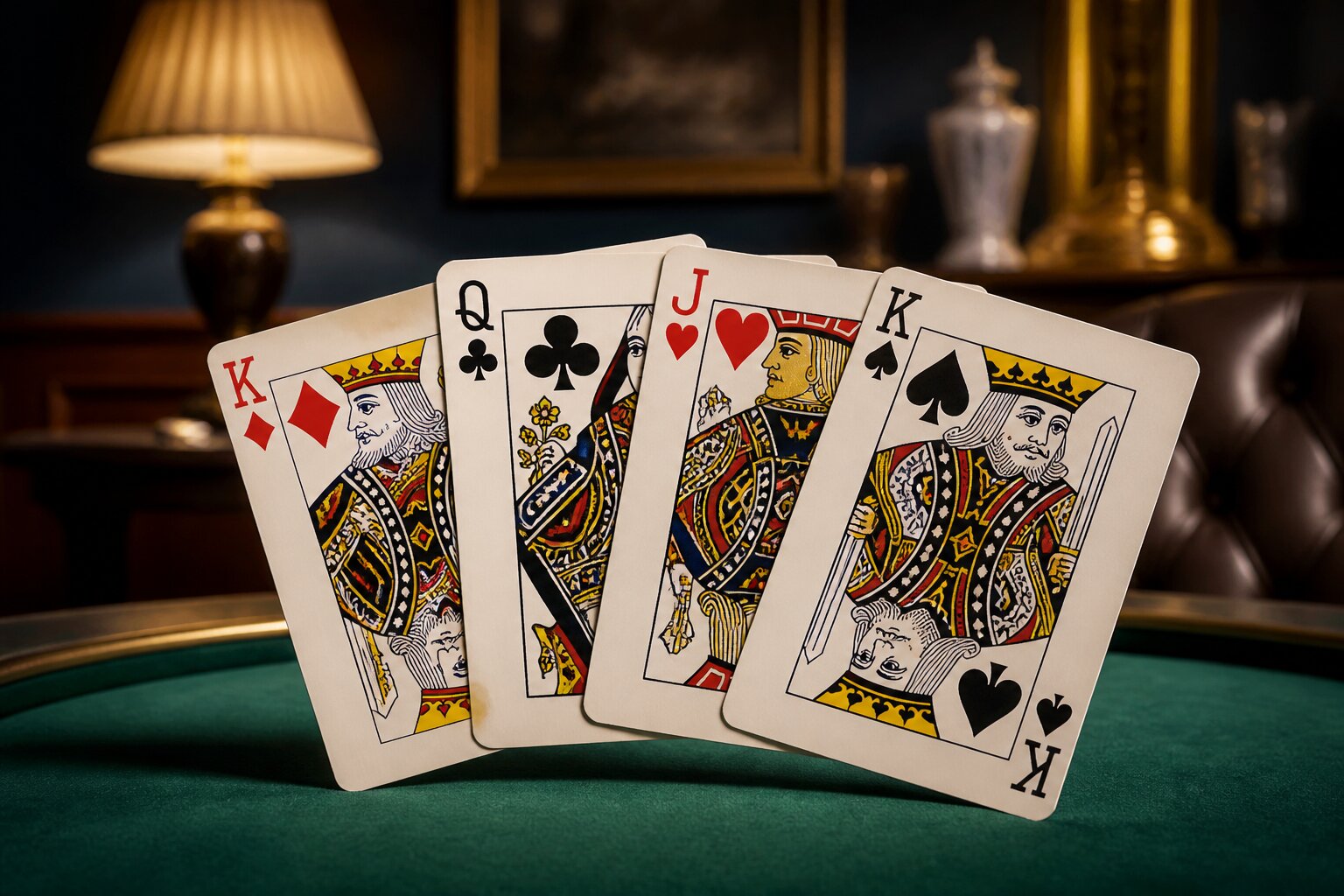
Ever wondered what makes some playing cards stand out from the rest? Those royal-looking cards with expressive faces and ornate outfits might have caught your eye during a game of poker or blackjack. They’re known as face cards, but what exactly does that mean?
If you’re curious about the different types of playing cards and what sets face cards apart, you’re in the right place. Whether you’re new to card games or just want a clearer picture of the deck, this guide walks through the meaning of face cards, their role in common games, and the other card types you’ll find in a standard pack.
Read on to discover what face cards represent, how many there are, and where they fit into play.
What Is the Meaning of Face Cards in Playing Cards?
Face cards are the Jack, Queen and King in each suit of a standard deck. They show a person’s face and figure on the card, which is the simple reason for the name.
Beyond appearance, face cards often serve specific practical roles in games. Many rules assign them higher values than numbered cards, or give them particular functions within a hand or trick-taking structure. The exact role depends on the game’s rules, so a King might be powerful in one game and merely a marker in another.
Historically, their designs draw on traditions of royalty and leadership, and these artistic choices have shaped how players read and use them over time. That visual distinction also makes them easy to identify in play.
To move on from what they mean to how many there are, the next section counts them up and explains where they sit in the pack.
How Many Face Cards Are in a Deck?
There are 12 face cards in a standard 52-card deck.
Each suit contains three face cards. These are:
- Hearts: Jack, Queen and King
- Diamonds: Jack, Queen and King
- Clubs: Jack, Queen and King
- Spades: Jack, Queen and King
Multiply the three face cards by the four suits and you arrive at the total of 12.
These face cards sit among the 52 cards alongside 40 numbered cards. Some decks also include jokers, but jokers are not usually counted as face cards and are often excluded from games that use a standard 52-card pack.
Because they are marked with J, Q or K and feature distinctive artwork, face cards are straightforward to pick out at a glance. In many games they are treated as picture cards, and their value or ranking can vary depending on the rules being used.
Recognising Face Cards: Suits and Illustrations
You’ll spot face cards by their illustrated people and their corner markings. The top left and bottom right corners display J, Q or K plus the suit symbol, so they remain identifiable even when fanned or partially covered.
The suit appears both in the corners and within the central artwork, which usually reflects period costume or symbolic elements linked to the suit. Jacks often carry a more youthful or military look, while Kings and Queens are shown in regal dress. These visual cues help players process hands quickly and decide how to play them.
If you’re sorting a new deck or teaching someone to play, pointing out the corner letters and suit symbols is a quick way to get them familiar with face cards.
What Are the Different Types of Playing Cards?
Playing cards exist in several styles suited to different uses, from standard gaming to collectors’ decks. Each style brings its own look and feel, and some are designed with specific uses or audiences in mind. Below are the main varieties you’re likely to encounter.
Standard Playing Cards
Standard decks contain 52 cards split evenly between the four suits, with number cards and the three face cards in each suit. Their consistent layout and clear markings make them suitable for a wide range of games, including trick-taking, matching and casual family games.
These decks are the baseline for most rulesets and are what most people picture when they think of playing cards. They are also the most widely produced and easiest to replace, which is why they remain the default choice in many settings.
Novelty Playing Cards
Novelty decks put a new spin on familiar cards. They often keep the same basic structure as a standard deck but change the appearance or materials to create a distinctive effect.
They might:
- replace traditional artwork with themed illustrations,
- use alternative colours for suits or backs,
- employ different materials such as plastic or coated paper.
These decks are often designed for collecting, gifting or adding a visual twist to a game night. Their unusual appearance can slow down recognition of familiar cards in play, so they tend to be better suited to casual use rather than formal play where speed and clarity matter.
As you’ll see later, which type of deck you use can affect readability and player preference. Small details like contrasting corner text or bold suit marks make a real difference in fast-paced games and in situations where clarity is important.
Do All Card Games Use Face Cards?
Not every game uses face cards, and some deliberately remove them to simplify play. Many traditional and modern games keep them because they add strategic options and recognisable ranks, but certain variants are designed around number cards only.
For instance, some versions of rummy and simpler children’s games omit face cards to make counting and melding easier. Other games, such as poker and blackjack, rely on face cards for their values and play dynamics. Whether face cards are present comes down to each game’s rules and the preferences of the players.
If you’re adapting a game for beginners or speed, removing face cards is a common way to streamline the pack.
Myths and Misconceptions About Face Cards
A few popular ideas about face cards are easy to spot, but they don’t all hold up.
One mistaken belief is that face cards carry some special power beyond their role in the rules. In fact, they are simply cards with human illustrations; their value and effect are assigned by the game. Another frequent assumption is that face card images depict specific historical people. While many designs borrow from historical dress or figures, most are stylised representations rather than portraits of named individuals.
Finally, although face cards often have higher values in many games, that isn’t universal. Their importance depends entirely on the mechanics of the particular game being played.
With those clarifications out of the way, the next section looks at why we call them face cards and how that name stuck.
Why Are They Called Face Cards?
The name comes from the straightforward fact that these cards show a human face. Unlike numbered cards, which present repeated suit symbols, the Jack, Queen and King each include a detailed portrait or figure.
These portraits are often more ornate and individual than the pip cards, which makes the distinction obvious at a glance. The faces can carry visual clues about rank, costume or historical inspiration, but the common factor is the depiction of a person rather than a symbol.
Over time the term became standard because it succinctly describes the most noticeable difference in design. Rather than signalling any special status beyond their appearance, the label simply distinguishes cards that depict faces from those that do not.
That clarity in naming helps when rules refer to “face cards” without needing to list J, Q and K every time. It makes instructions quicker to read and easier to understand, especially in rulebooks, game guides and casual conversation.
Face Cards in British Card Games
Face cards play prominent roles across many games popular in Britain, often influencing trick-taking, scoring and hand composition.
In trick-taking games like Whist and Bridge, face cards commonly carry higher rank and are central to winning tricks. In Blackjack, Jacks, Queens and Kings all count as 10, which shapes how hands are valued and which combinations players aim for. Other games, including Snap and Rummy, use face cards as part of melds or special scoring rules, where a single high card can change the flow of a round.
Different games treat face cards in distinct ways, so familiarity with their various uses helps when switching between formats. Now that you’ve seen examples of play, here’s a short note on keeping gaming controlled and enjoyable.
Play Responsibly
Set clear limits before you play and stick to them. Treat card games as entertainment and stay aware of time and spend. If you notice play becoming stressful or problematic, it’s sensible to pause and seek support. Ending on a positive note, good preparation and measured play keep card nights enjoyable for everyone.
**The information provided in this blog is intended for educational purposes and should not be construed as betting advice or a guarantee of success. Always gamble responsibly.