
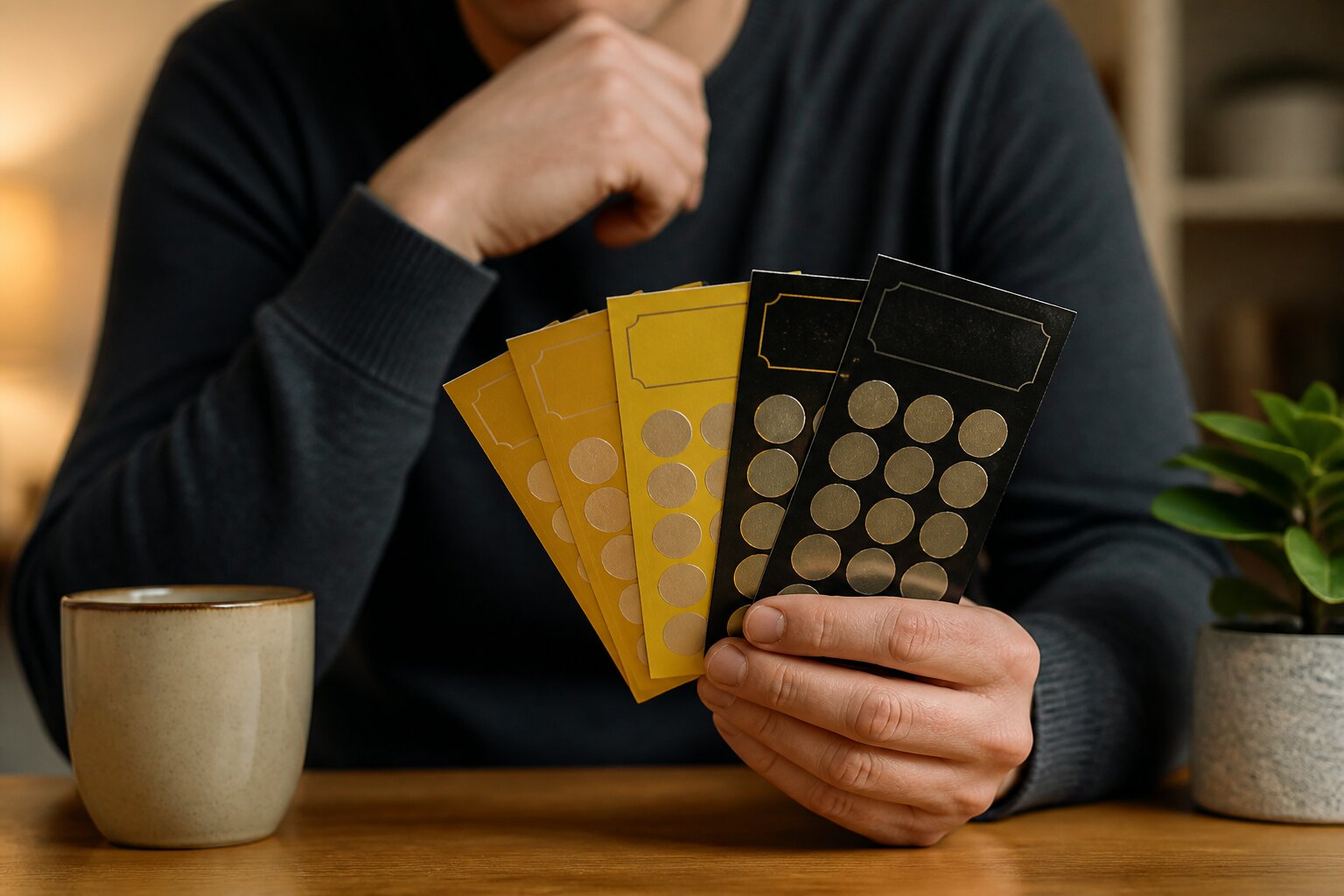
Ever stood in the shop, looking at all the different scratch cards and wondering if splashing out on a pricier one will give you a better shot at winning? You are not alone — it is a question many people ask.
It can feel intuitive that paying more should buy better odds, but with tickets ranging from a couple of pounds to higher-priced options, the reality is less straightforward. Before you hand over your cash, it helps to understand how these games are put together so you can make a clearer choice and keep your play controlled and enjoyable.
Understanding How Scratch Cards Work
Scratch cards are simple to play, yet their outcomes are set before you buy them. Each game batch is printed with a predefined spread of winning and non-winning cards and prizes are allocated across that print run. That means the chances tied to a particular ticket are established in advance, not influenced by which card you pick from a stack.
The odds and prize distribution for every title are published on the card, so you can see the stated probability of winning before you buy. While some tickets may show a higher percentage of sales returned as prizes, this is a design choice by the game creator rather than a cue that any single purchase will be successful.
Knowing this helps you keep expectations realistic and focus on the experience rather than a guaranteed outcome. Next, we will look at what makes a card more expensive and what that price actually represents.
What Makes a Scratch Card 'Expensive'?
Scratch cards vary in price, commonly starting at around £1 and going up to £10 or more. Those at the higher end are often labelled premium and typically cost £5 or above. The ticket price usually reflects the size of the top prize and any additional game features, such as bonus rounds or extended play elements.
Higher cost does not inherently mean better odds. Instead, paying more tends to change the prize mix: there may be fewer small prizes and a larger top prize, along with features meant to make the game feel more involved. The printed odds and prize table remain the reliable way to compare games, rather than the price alone.
With that in mind, comparing how prize structures differ between cheaper and pricier cards clarifies what you are actually buying.
Comparing Prize Structures: Cheap vs. Costly Scratch Cards
The main difference between low-cost and high-cost tickets lies in how prizes are distributed. Expensive cards usually offer larger top prizes and sometimes a slightly higher return to players, while cheaper cards often have more frequent small prizes. These distinctions are set when the game is designed and printed, so they reflect the overall structure rather than changing the intrinsic chance of any single play.
Payout Percentages and Odds
Payout percentage, also known as return to player, measures how much of the total sales are returned in prizes over time. Pricier tickets can show higher payout percentages, for example mid-60s up to the mid-70s, whereas lower-priced tickets can be lower. Despite that, the chance of winning any prize depends on how many winning tickets exist in that particular game and where the prizes are placed in the print run.
It is important to remember that payout percentage is an average across all tickets and all players, not a guarantee for an individual. A ticket with a higher published payout does not ensure a win on any given purchase. Official odds printed on the back of many tickets give an overall indication of prize frequency, but they do not identify the position of winning tickets within batches or individual shops.
Size and Frequency of Prizes
Expensive cards tend to concentrate value into a few big prizes. That means the occasional win may be substantial but smaller wins may be rarer. Lower-cost cards usually spread smaller prizes more widely, producing more frequent, modest returns. Which structure appeals more depends on whether a player prefers more regular small wins or the possibility of a larger payout.
The way prizes are distributed affects the variance a player experiences. Games with large top prizes and fewer smaller wins have higher variance, so outcomes are more unpredictable. Cheaper games with many small prizes have lower variance and deliver steadier, though generally smaller, returns. Being aware of this difference helps set realistic expectations about how often and how much one might win, while recognising that every ticket purchase is an independent event. The next section looks directly at whether price changes your actual chances of winning.
Does Price Affect the Odds of Winning?
The price tag itself does not directly change an individual ticket's odds. Each game comes with its own stated odds and prize allocation, and those are the real determinants of the likelihood of winning. A more expensive ticket might have a higher overall payout percentage, but that does not guarantee that buying one will increase the probability of success for that purchase.
Odds are established when the game is produced and are published on the card so you can make an informed choice. Treating the price as one of several factors — along with prize structure and personal budget — helps you choose without expecting a predictable result. Up next, we will debunk common myths that often colour players' choices.
Common Myths About Scratch Card Pricing
Several myths persist around scratch cards, and clearing them up helps avoid mistaken assumptions. One is that a higher-priced card automatically offers better chances of winning. While pricier titles may offer larger top prizes or different prize mixes, the actual chance tied to any ticket is set by the game’s design.
Another misconception is that buying many expensive tickets in sequence increases the likelihood of a win. Each ticket functions independently; previous purchases do not alter the outcomes of remaining tickets. It is also sometimes thought that the most expensive cards provide the best value, but a larger price just shifts the balance of prize sizes rather than guaranteeing a greater return.
With those misunderstandings cleared up, the next section considers whether premium tickets are worth buying from the perspective of value and enjoyment.
Are Premium Scratch Cards Worth Buying?
Premium scratch cards can be worth buying for people who enjoy their specific features: larger jackpots, themed games or bonus mechanics that extend the reveal process. These design elements can heighten interest and make the purchase feel more entertaining.
However, the extra cost should be weighed against personal finances and expectations. Premium tickets usually offer the same basic certainty that results are fixed before sale, so their appeal is mostly experiential rather than probabilistic. Choosing a premium card because the features match what you find enjoyable is reasonable, but it is sensible to do so within a set budget. The following section outlines additional considerations to keep in mind before buying.
What Else Should You Consider Before Purchasing?
Before selecting a scratch card, consider how it fits into personal finances and what you want from the experience. Set a firm spending limit that does not interfere with essential expenses, and decide in advance how much you are comfortable allocating to this type of entertainment.
Think about what you value from the ticket: the chance of a bigger top prize, the frequency of small wins, or simply the fun of the design and bonus features. Be honest about your tolerance for losing the amount spent and avoid chasing losses. If the purchase ever feels like a pressure rather than a choice, stepping away is the clearest sign to reassess.
Balancing these factors helps ensure buying a scratch card remains a brief diversion rather than a source of stress. Choose within your means and enjoy the experience for what it is, concluding the look into how price relates to chances and value.
**The information provided in this blog is intended for educational purposes and should not be construed as betting advice or a guarantee of success. Always gamble responsibly.