
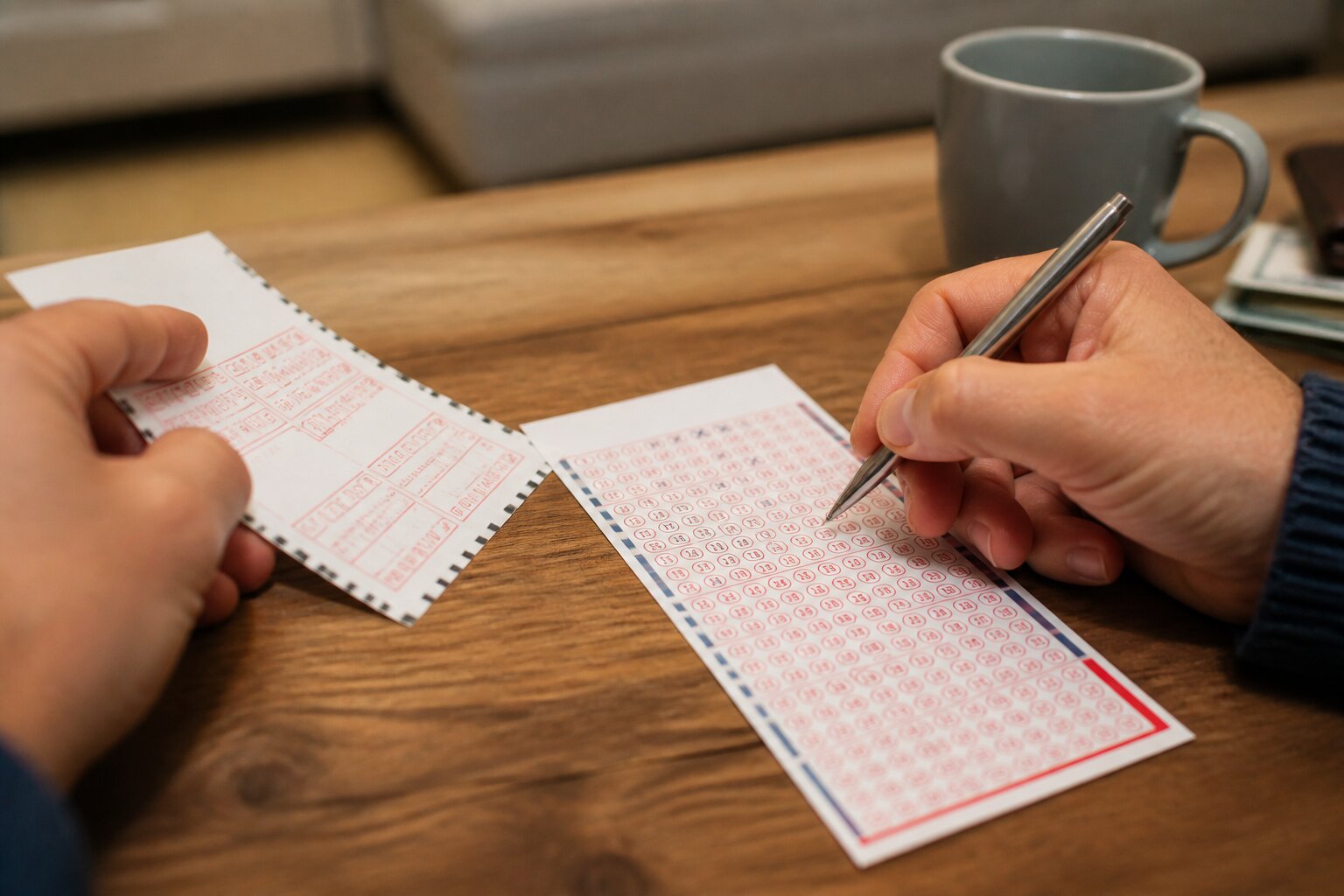
When people play the lottery they use different approaches: some choose numbers that matter to them, others let the terminal generate a random set. Those habits can feel meaningful, but they don’t change the way the draw itself operates.
This article explains the difference between a Lucky Dip and selecting your own numbers, how draws are conducted, what the statistics show, common misconceptions, and why players prefer one method over the other. Read on to get a clear view of what really affects your chances before you buy a ticket.
What Is the Difference Between Lucky Dip and Choosing Your Own Numbers?
A Lucky Dip is a quick option where the terminal generates a random combination and fills your ticket automatically. You don’t pick any numbers yourself; the system supplies a fresh set each time you choose this method.
Choosing your own numbers means you manually select the digits you want on the ticket. Players often use birthdays, anniversaries or repeating favourites, and some stick with the same combination over many draws while others vary their picks.
Both choices are available for main draws and are simply different ways of entering. If you prefer to avoid the decision-making, a Lucky Dip saves time; if you enjoy personalising a ticket, picking your own numbers gives that sense of involvement. Next, we’ll look at exactly how those winning numbers are chosen.
How Are Lottery Numbers Selected?
Official draws use tightly controlled processes to ensure results are random and transparent. Mechanical draw machines mix numbered balls in a drum and select the winners, while in some games a computerised random number generator is used. Both methods are subject to rigorous testing and security checks.
Regulatory oversight and independent auditors monitor draws to confirm procedures are followed and there is no interference. The safeguards mean the outcome is determined by the draw mechanism itself rather than by players’ choices or external influence.
Understanding that draws are designed to be impartial helps frame why the next question — whether your selection method alters your odds — matters to players.
Does Choosing Your Own Numbers Improve Your Odds?
Selecting your own numbers does not increase the likelihood of winning. Each possible combination has the same mathematical probability of being drawn, whether it was picked by a person or produced automatically by a terminal.
Personal strategies—choosing meaningful dates, patterns or repeating a set—do not alter the statistical chance of matching the winning numbers. Every ticket is an independent entry with the same underlying probability in each draw.
That clarity makes it easier to decide how you want to play: focus on enjoyment and personal preference rather than on expectations of improved odds. With that settled, it’s useful to see what official figures say about real-world outcomes.
What Do the Statistics Say About Lucky Dip vs Own Numbers?
National lottery data and independent analyses show no difference in winning frequency between machine-generated entries and self-selected numbers. Large prizes have been claimed by both types of tickets, reflecting the distribution of how people play rather than any advantage for one method.
Because millions of combinations exist and each draw is random, statistical summaries consistently demonstrate equal chances per ticket. The evidence supports the simple conclusion that whether a ticket was created by a terminal or a person does not affect the underlying probability of it being drawn.
With the statistical position clear, it’s worth unpacking common myths that still circulate about supposedly better ways to choose numbers.
Common Myths About Lottery Number Selection
Many beliefs suggest that patterns, special combinations or analysis of past results can influence outcomes. In reality, draws are independent events and the outcome of one does not change the odds of another. Claims about “hot” or “cold” numbers or guaranteed systems are not supported by the mechanics of the game, and relying on them can lead to misplaced confidence rather than better chances.
People sometimes point to coincidences or short-term trends as proof of a system, but these observations do not alter the underlying mathematics. Random processes can produce runs and clusters that look meaningful, yet they remain the product of chance rather than a repeatable strategy. It is important to separate interesting curiosities from factors that would actually affect the probability of winning.
Do ‘Lucky’ Numbers Really Matter?
People often pick dates or repeat favourites because those choices feel significant, but there is no evidence that particular numbers are more likely to be selected in a draw. Choosing a number that has sentimental value can make the game more enjoyable for an individual, and that personal meaning is a perfectly valid reason to select certain numbers.
However, personal attachment may make a ticket more enjoyable, yet it does not change the draw process or improve the likelihood of success. Treating number selection as a way to enhance the entertainment value of play is reasonable, but expecting luck to follow a particular digit does not align with how the draws operate.
Is There a Pattern to Winning Numbers?
Analysing past results can be interesting, but it does not reveal a reliable pattern that affects future draws. Each draw is independent and every number has the same chance of being chosen each time a draw runs. Any perceived regularities are the result of randomness rather than a repeatable rule that players can use to increase their odds.
People may find statistics or charts engaging, and they can be a harmless pastime for those curious about numbers. It is wise, though, to view such analysis as an exercise in observation rather than a means to predict outcomes or to justify higher spending on tickets.
Having covered misconceptions, next we’ll consider why players gravitate toward one method or the other and what that says about how people experience play.
The Psychological Side: Why Do Players Prefer One Method Over The Other?
Preferences often come down to emotion and habit. Picking numbers can create a ritual that adds meaning to participation; sticking with the same combination week after week gives continuity. For others, using a Lucky Dip removes decision-making and the small anxiety of choosing “the right” numbers.
Some players enjoy the act of selecting as part of the entertainment, while others favour convenience and speed. These psychological factors shape how people play even though they do not affect the mathematical odds. Knowing this can help someone choose the approach that makes the experience most satisfying.
Having considered behaviour and belief, the final section summarises the practical takeaway for anyone deciding how to play.
Summary: Which Method Is Better for Winning?
There is no statistical or procedural advantage to either a Lucky Dip or manually selected numbers; each ticket has the same chance of match the drawn combination. Choosing how to enter becomes a matter of personal preference—whether you value convenience, ritual, or involvement.
Play should be treated as entertainment, not a reliable way to make money. Set sensible limits and make choices that keep the experience enjoyable without expectations of a specific outcome. If you want to continue, try the method that suits you best and play responsibly.
**The information provided in this blog is intended for educational purposes and should not be construed as betting advice or a guarantee of success. Always gamble responsibly.