
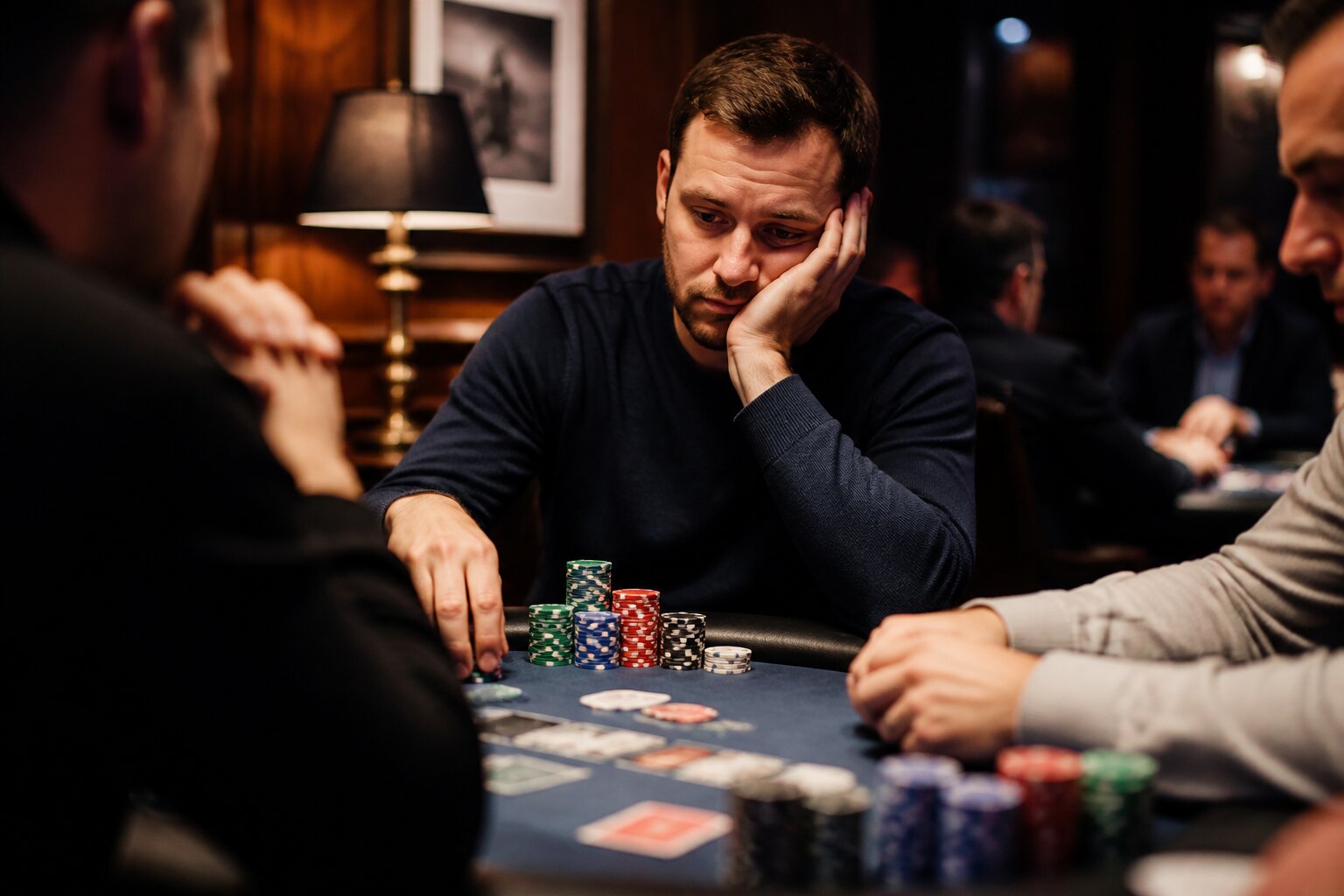
Ever found yourself at a poker table with that one player who calls almost every bet, no matter the size? You bet big, you bluff, you shove—and they still hang on, showing up to the river with hands most would have folded.
These “calling stations” are a common presence in both live and online games. Spotting them and understanding their style can make the difference between squeezing value from a pot and getting frustrated by repeated showdowns.
What follows explains who calling stations are, how they behave, why they play that way and how to adapt your approach to get the most out of hands against them.
What Is a Poker Calling Station?
A calling station is a player who prefers to call rather than fold or raise, often staying in hands to see more cards even when the odds are unfavourable. They rarely apply pressure through raises and typically take a passive approach, reaching showdowns with hands that many opponents would release earlier.
You can recognise one by their willingness to call bets at every street. Imagine holding a strong pair on the flop and betting for value, only to have the same opponent call with a much weaker holding, then follow through with calls on the turn and river. That behaviour marks them as someone who prioritises seeing the outcome over folding to evidence of strength.
This tendency affects the table dynamic and the way value must be extracted from hands: the next section looks at the concrete behaviours you’ll commonly see from these players and how they shape the action.
Typical Behaviours of Calling Stations
Calling stations show consistent patterns throughout a session. Their choices tend to be reactive rather than proactive, and they normally avoid raising unless they hold a very strong hand. Because of this, you’ll see the pot size grow differently and encounters play out in a predictable way.
One common pattern is calling down with marginal pairs or draws when board textures become unfavourable. For instance, a player holding a low pocket pair may call bets on the flop and keep calling despite multiple overcards appearing later. Similarly, chasing straights or flushes by flat-calling rather than folding is typical, even when the probability of completing the draw is low.
These players also pay off value bets more often than not, which means that when they face a clear favourite they will likely call rather than fold. Over time, this makes them a steady source of value for opponents who bet appropriately with strong hands. The next section lists clear signs you can use at the table to identify a calling station.
Common Traits of Calling Stations
Calling stations share a handful of observable traits that make them easier to spot once you know what to look for. Recognising these can help you make better decisions and adjust the way you use your strong hands.
Signs You Are Facing a Calling Station
- Consistently calling bets: They call most bets put to them, from small continuation bets to larger wagers, without much regard for bet size.
- Rarely raising: Raises are uncommon unless they have the very best possible hand.
- Stubborn with weak hands: Low pairs, single-pair holdings and weak draws are often carried through to later streets.
- Revealing odd showdowns: At showdown they turn over hands many players would have folded earlier.
- Ignoring opponent behaviour: They seldom change strategy in response to table aggression or shifting dynamics.
These signs often appear together and repeat across hands; the next subsection explains how those patterns influence the overall table.
Behavioural Patterns at the Table
Calling stations tend to call on every street, creating longer hand histories and larger final pots when they face value bets. Their passive stance means they lose chips incrementally rather than in single large swings, and they rarely use aggression to win pots outright. Because they pay off value bets, premium hands become more profitable when played against them.
Understanding these patterns helps opponents focus less on deception and more on extracting value—details which the following section explores in terms of game impact.
How Do Calling Stations Impact Poker Games?
The presence of a calling station shifts the game towards value-centric play. Bluffs lose effectiveness because these players seldom fold, so the profitable path is to favour bets that extract value when ahead rather than attempts to force folds.
Pots can grow larger than usual, since marginal hands are kept alive through additional streets. That benefits players who reliably make top hands and bet for value, while also meaning occasional hands will be overturned when a low-probability draw completes and overtakes a previously stronger holding. In response, experienced opponents tighten bluffing ranges and increase bet sizes to match the board and their actual equity.
This change in approach leads naturally into why some players adopt a calling-station style in the first place, which is explored next.
Why Do Some Players Become Calling Stations?
Several factors can lead a player to adopt this calling-heavy style. Lack of experience or an incomplete grasp of strategic folding is a common cause: newer players may equate staying in a hand with better chances of winning, overlooking the cost of calling down with weak equity.
Emotional factors also play a role. Investment aversion—an unwillingness to fold after chips are already in the pot—can keep players committed to hands beyond what the board or action warrants. Some simply enjoy seeing showdowns and the social side of the game more than optimising for long-term profit, treating poker as entertainment rather than a results-driven pursuit.
Occasionally, a player may believe calling frequently will catch bluffs from aggressive opponents. While isolated wins can occur when low-probability outcomes materialise, that approach tends to be costly over many hands. With those motivations in mind, the next section outlines practical ways to respond.
Best Ways to Respond to Calling Stations
Adapting to calling stations means favouring straightforward, value-driven play over elaborate bluffs. Because these opponents rarely fold, bluffing loses its usual leverage; instead, hands that contain real showdown value become the most profitable to pursue.
Adjust hand selection toward holdings that fare well in head-to-head confrontations and focus bet sizing on extracting value rather than forcing folds. Top pairs, two pairs and made draws should be wagered for value in a way that builds the pot when ahead. Speculative hands that rely on opponents folding are less valuable in this environment and can be deprioritised.
Maintain discipline: accept that calling stations will sometimes complete low-probability draws and win a pot, but those instances are part of the variance you should expect. Keep to preset bankroll limits, take breaks when needed and review results objectively to prevent frustration influencing decisions. By doing so you preserve both your bankroll and the long-term quality of your play.
Recognising a calling station and adjusting to extract steady value will make your sessions more productive and less stressful, so concentrate on measured, evidence-based decisions rather than trying to outguess a player who just wants to see the cards.
Explore Casino Games at Slots UK
We'd love to welcome you to our site, where you can enjoy all the entertainment of online casino games with us at Slots UK. Take your seat and see what our friendly community has to offer.
Getting started is easy: simply create an account, make your first deposit and you can start playing with us. We look forward to sharing the fun with you.
**The information provided in this blog is intended for educational purposes and should not be construed as betting advice or a guarantee of success. Always gamble responsibly.